 Accueil > Discover > Fortresses >
 carcassonne
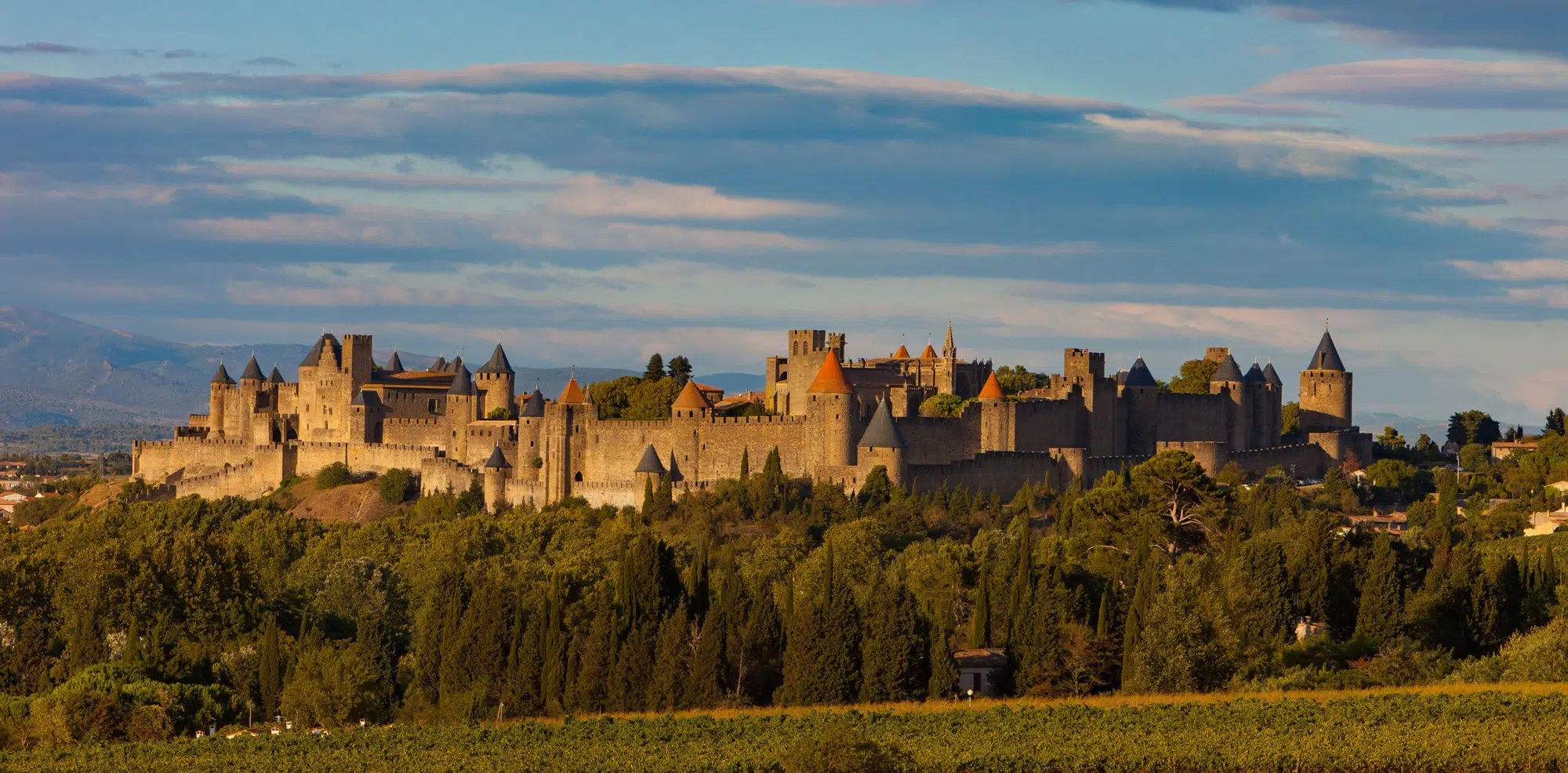
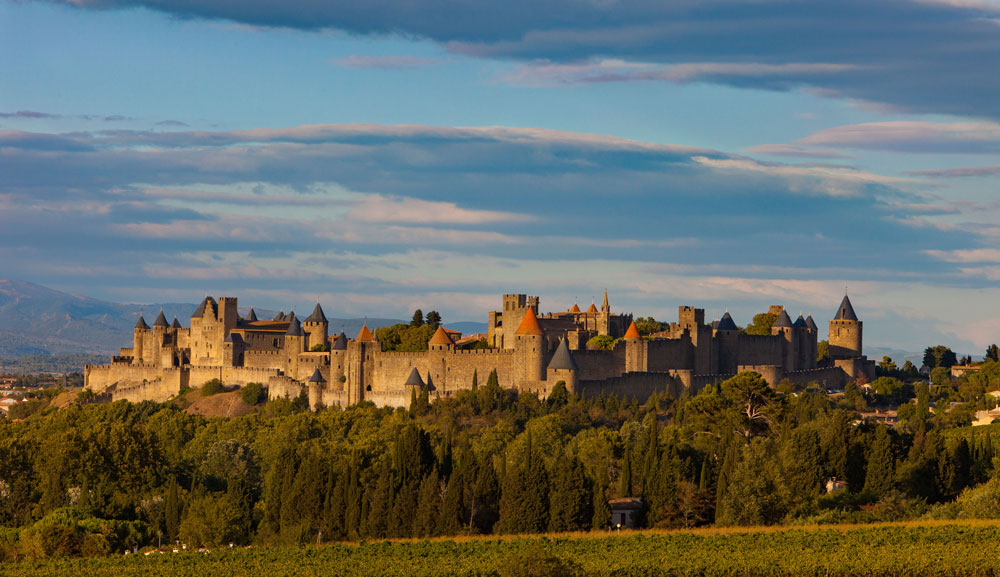
Comprising a castle at the heart of the city and two enclosures armed with 52 towers, the fortifications of Carcassonne were, in the 13th century, the central element of the defensive system designed by Louis IX and his successors.
CURRENT LANDSCAPE SETTING

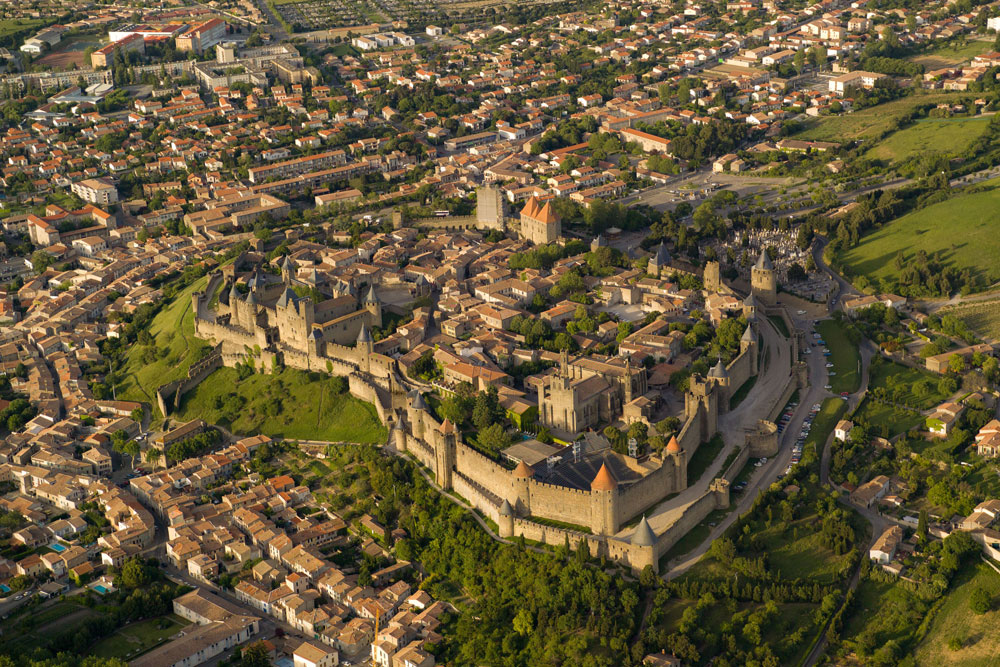
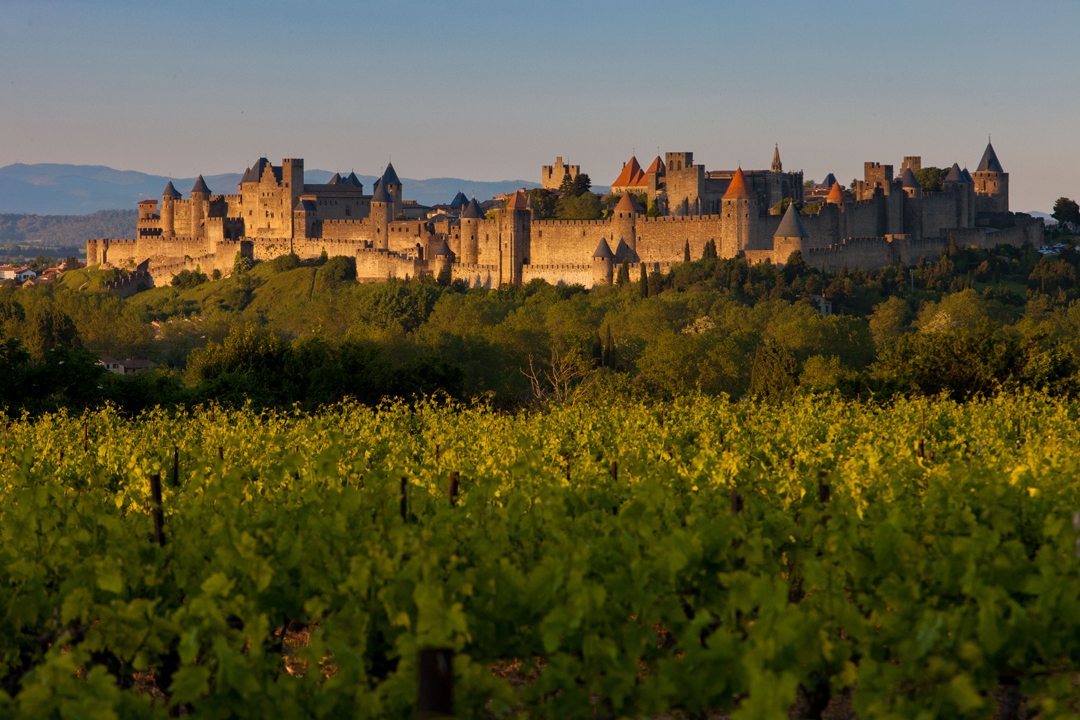
At first glance, the landscape of the City of Carcassonne may seem entirely different from the spectacular reliefs of the mountain fortresses. Here, it lies on the edge of the Aude basin, amidst hills shaped by Tertiary sedimentary deposits (the famous “molasse”), at the heart of a wine-growing and peri-urban environment. However, the site shares similar characteristics: built at an altitude of 150 m on a sandstone hill – the “Carcassonne sandstone,” which provided the material for its constructions – the fortified city dominates the river and extends over the plain.
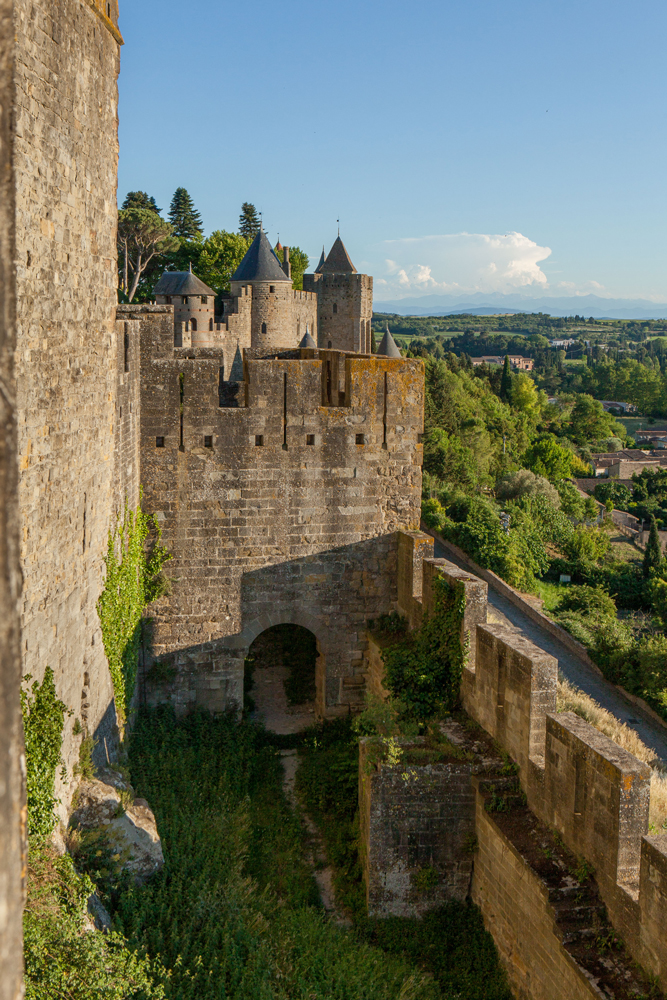
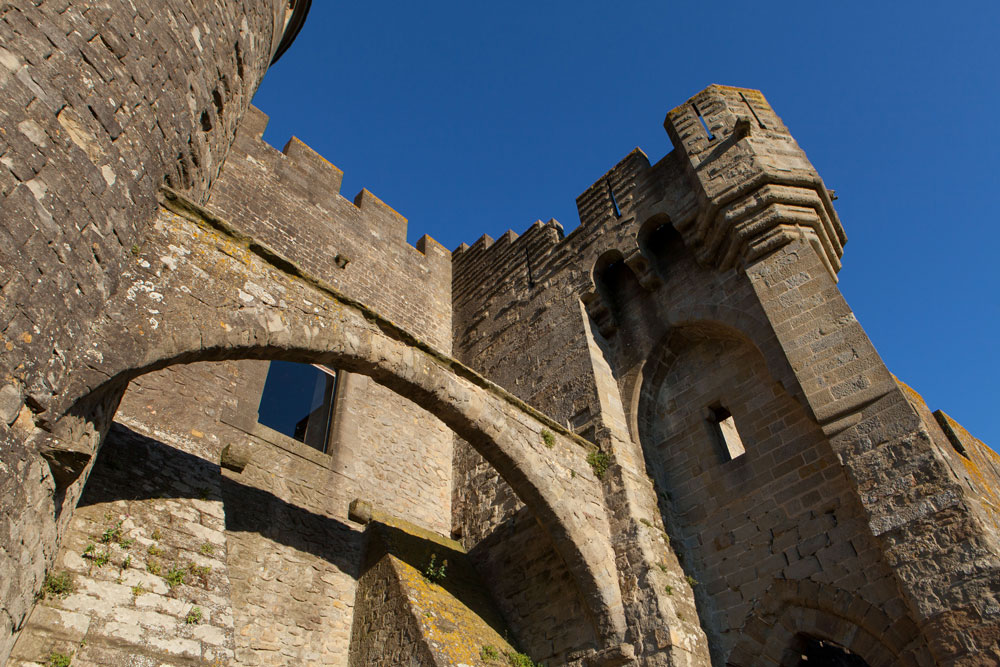
From any approach, the imposing ramparts tower over the visitor.
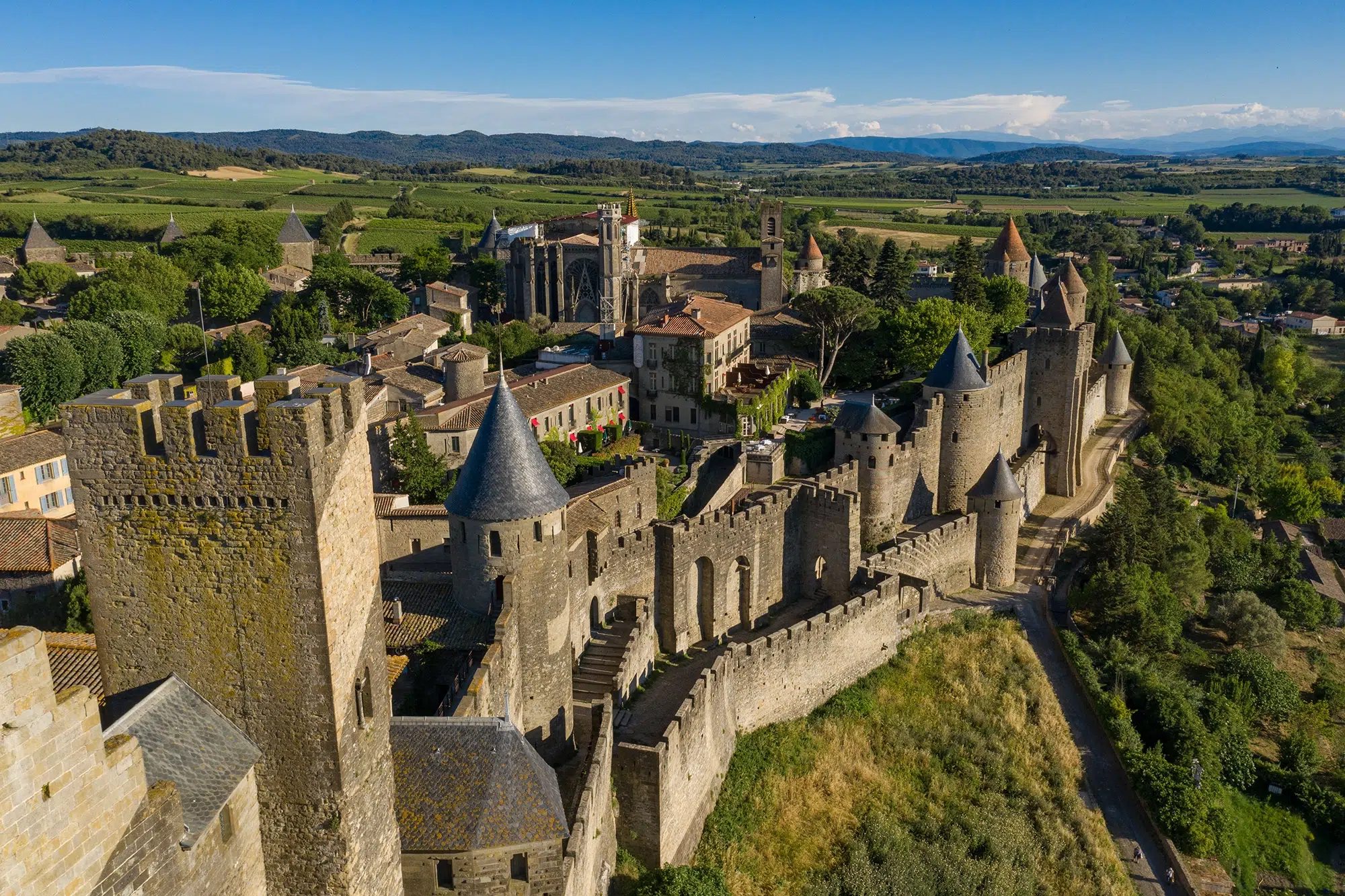
From the ramparts, as one walks along, the view unfolds towards the Montagne Noire, the Lauragais, and the Corbières, and beyond to the Pyrenees.
Embedded in the local geology and dominating its territory, the City of Carcassonne is both a perched fortress and the perfect model of a medieval city.
HISTORY
Perched on a sandstone hill above the Aude river, overlooking the plain between the Montagne Noire and the Pyrenees, Carcassonne was long coveted for its strategic position on the passage from the Mediterranean to the Atlantic. It eventually became the centerpiece of the defensive system designed in the 13th century by the Crown of France to establish royal power over the region and control the border with the Kingdom of Aragon.
JULIA CARCASO, THE ROMAN CITY
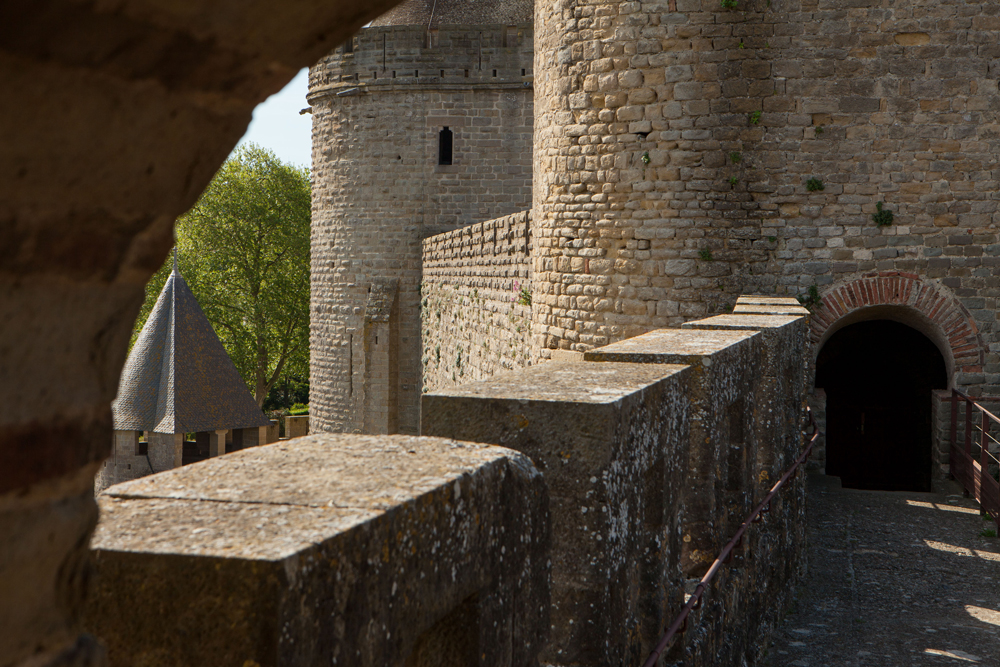
The promontory on which the City stands was occupied very early, from the 6th century BC, but it was not until the Roman conquest, in 118 BC, that the primitive settlement developed below, to the north of the hill. Around 27 BC, the city appeared in the list of twenty cities of Narbonnaise mentioned by Pliny the Elder in his Historia naturalis. The colony of Julia Carcaso extended over the western part of the Aude basin. Less important than its two neighbors, Narbonne and Toulouse, Carcassonne was nevertheless an active center of life during the early Roman Empire. In the second half of the 3rd century and the 4th century, insecurity was such that the city sheltered behind a powerful 1200 m enclosure, thus becoming a castellum. The remains of this ancient fortification are still visible on two-thirds of the inner rampart, recognizable by their rows of bricks.
JULIA CARCASO, THE ROMAN CITY
The promontory on which the City stands was occupied very early, from the 6th century BC, but it was not until the Roman conquest, in 118 BC, that the primitive settlement developed below, to the north of the hill. Around 27 BC, the city appeared in the list of twenty cities of Narbonnaise mentioned by Pliny the Elder in his Historia naturalis. The colony of Julia Carcaso extended over the western part of the Aude basin. Less important than its two neighbors, Narbonne and Toulouse, Carcassonne was nevertheless an active center of life during the early Roman Empire. In the second half of the 3rd century and the 4th century, insecurity was such that the city sheltered behind a powerful 1200 m enclosure, thus becoming a castellum. The remains of this ancient fortification are still visible on two-thirds of the inner rampart, recognizable by their rows of bricks.
VISIGOTHS AND SARACENS
In the first quarter of the 5th century, the Visigoths conquered southern Gaul and a large part of the Iberian Peninsula. Carcassonne became one of the cities of Visigothic Septimania. The north of the Visigothic kingdom collapsed under the pressure of the Franks from the beginning of the 6th century. In 508, Clovis unsuccessfully besieged Carcassonne, which thereafter became the main stronghold of the border march between the two kingdoms. In the 8th century, the Saracen invasion put an end to the Visigothic kingdom of Spain. The Arabs were definitively driven out of Septimania by the Carolingian rulers at the end of the 8th and beginning of the 9th centuries.
Carcassonne has been an episcopal see since the 6th century. The first mention of the cathedral church, dedicated to Saints Nazarius and Celsus, dates from 925. The city gradually began to expand beyond its walls, and a borough of Saint-Michel is mentioned around the year 1000.
THE TRENCAVELS IN TURMOIL
In the 11th-12th centuries, Carcassonne developed under the rule of the Trencavel viscounts. Thanks to their marital alliances and skillful politics, cleverly exploiting the rivalry between the two great neighboring principalities of Toulouse and Barcelona, this family governed the viscounties of Albi, Carcassonne, and Béziers. In 1096, the construction of the Romanesque cathedral began, while the erection of the viscount’s castle can be dated to the second quarter of the 12th century.
In 1208, Pope Innocent III, concerned by the growing influence of the Cathar heresy, called for a crusade. In the spring of 1209, the Barons’ Crusade set out southward. In August, the crusaders besieged Carcassonne, which capitulated after fifteen days. Appointed Viscount of Carcassonne, Simon de Montfort continued the crusade until his death in 1218 during the siege of Toulouse. The viscounty was definitively annexed to the royal domain in 1226, following a new crusade led this time directly by the King of France.
THE TRENCAVELS IN TURMOIL
In the 11th-12th centuries, Carcassonne developed under the rule of the Trencavel viscounts. Thanks to their marital alliances and skillful politics, cleverly exploiting the rivalry between the two great neighboring principalities of Toulouse and Barcelona, this family governed the viscounties of Albi, Carcassonne, and Béziers. In 1096, the construction of the Romanesque cathedral began, while the erection of the viscount’s castle can be dated to the second quarter of the 12th century.
In 1208, Pope Innocent III, concerned by the growing influence of the Cathar heresy, called for a crusade. In the spring of 1209, the Barons’ Crusade set out southward. In August, the crusaders besieged Carcassonne, which capitulated after fifteen days. Appointed Viscount of Carcassonne, Simon de Montfort continued the crusade until his death in 1218 during the siege of Toulouse. The viscounty was definitively annexed to the royal domain in 1226, following a new crusade led this time directly by the King of France.
THE ROYAL SENESCHALTY
Carcassonne then became the seat of administrative and military power within a royal district: the seneschalty. From 1228, major works were undertaken to improve the defensive system: construction of a fortified belt around the castle, erection of a second urban enclosure preceded by a dry moat, and the creation of lists (open spaces) between the two lines of fortification.
In September 1240, Raymond Trencavel II attempted to retake possession of the City and besieged it, benefiting from the complicity of the surrounding suburbs. He retreated a month later. In 1244, King Louis IX had the Saint-Michel and Saint-Vincent suburbs completely razed to punish them for their rebellion. A second fortification campaign was then undertaken: restoration of destroyed enclosure elements, reinforcement of the eastern front, and construction of the Vade tower. In 1248, Louis IX definitively settled the inhabitants of the destroyed suburbs in a new town, the bastide, built on the left bank of the Aude.
AN EXTRAORDINARY FORTRESS
At the end of the 13th century, under the reigns of Philip III the Bold and Philip IV the Fair, the City’s fortifications were modernized, and a significant portion of the inner enclosure was rebuilt according to the technical advancements in military architecture. From then on, Carcassonne was an extraordinary stronghold, served by a permanent garrison and substantial weaponry. Its innovative military architecture served as a model throughout the territory, particularly in the construction of mountain sentinel castles, built after 1258 in less than half a century by order of the king and under the control of the seneschal of Carcassonne. The seneschal was responsible for appointing castellans to lead the garrisons, ensuring their supplies, and providing them with the necessary weaponry and military equipment.
AN EXTRAORDINARY FORTRESS
At the end of the 13th century, under the reigns of Philip III the Bold and Philip IV the Fair, the City’s fortifications were modernized, and a significant portion of the inner enclosure was rebuilt according to the technical advancements in military architecture.
From then on, Carcassonne was an extraordinary stronghold, served by a permanent garrison and substantial weaponry. Its innovative military architecture served as a model throughout the territory, particularly in the construction of mountain sentinel castles, built after 1258 in less than half a century by order of the king and under the control of the seneschal of Carcassonne.
The seneschal was responsible for appointing castellans to lead the garrisons, ensuring their supplies, and providing them with the necessary weaponry and military equipment.
A LOGISTICAL BASE
A political, administrative, and military center, the City thus became the logistical base for this imposing border defense system, which marked the early emergence of a centralized state in France. The City’s power and deterrent force were such that royal decrees referred to it as the “key” to Languedoc, and it was not subjected to attacks during the Hundred Years’ War. In 1355, the Black Prince, during his chevauchée, burned the bastide but refrained from besieging the City.
AN INEXORABLE DECLINE
From 1472 to 1659, the date of the signing of the Treaty of the Pyrenees, the City still retained its role as a stronghold on an insecure southern border. However, it tended to depopulate in favor of the bastide, the economic center of the region. For financial reasons, the king sold off part of his crown lands. Houses began to be built in the lists.
After the signing of the Treaty of the Pyrenees in 1659, which ratified the annexation of Roussillon by France and the shifting of the Franco-Aragonese border, the City lost the eminent role it had previously played in the royal border control system. Its decline was inexorable, and gradually, all powers (judicial, religious, etc.) were transferred to the bastide, which had become a flourishing town thanks to the textile industry and trade.
AN INEXORABLE DECLINE
From 1472 to 1659, the date of the signing of the Treaty of the Pyrenees, the City still retained its role as a stronghold on an insecure southern border. However, it tended to depopulate in favor of the bastide, the economic center of the region. For financial reasons, the king sold off part of his crown lands. Houses began to be built in the lists.
After the signing of the Treaty of the Pyrenees in 1659, which ratified the annexation of Roussillon by France and the shifting of the Franco-Aragonese border, the City lost the eminent role it had previously played in the royal border control system. Its decline was inexorable, and gradually, all powers (judicial, religious, etc.) were transferred to the bastide, which had become a flourishing town thanks to the textile industry and trade.
VIOLLET-LE-DUC TO THE RESCUE
Having lost its status as a military stronghold, the City of Carcassonne was threatened with destruction: the fortifications were handed over to the Domains administration, which began selling them as building materials. Through the efforts of local scholars and dignitaries, the City was classified as a historical monument in 1849, and its restoration was entrusted to the architect Eugène Viollet-le-Duc. Work began under his responsibility in 1853 and continued, after his death in 1879, until 1910. For his restorations, Eugène Viollet-le-Duc relied on the medieval construction techniques of the 13th century, which he had meticulously analyzed. It is this exemplary restoration that earned the City of Carcassonne its first inscription on the UNESCO World Heritage list → in 1997.
The first half of the 20th century saw the beginning of tourist visits to the site, which have continued to grow ever since.
SITE DESCRIPTION
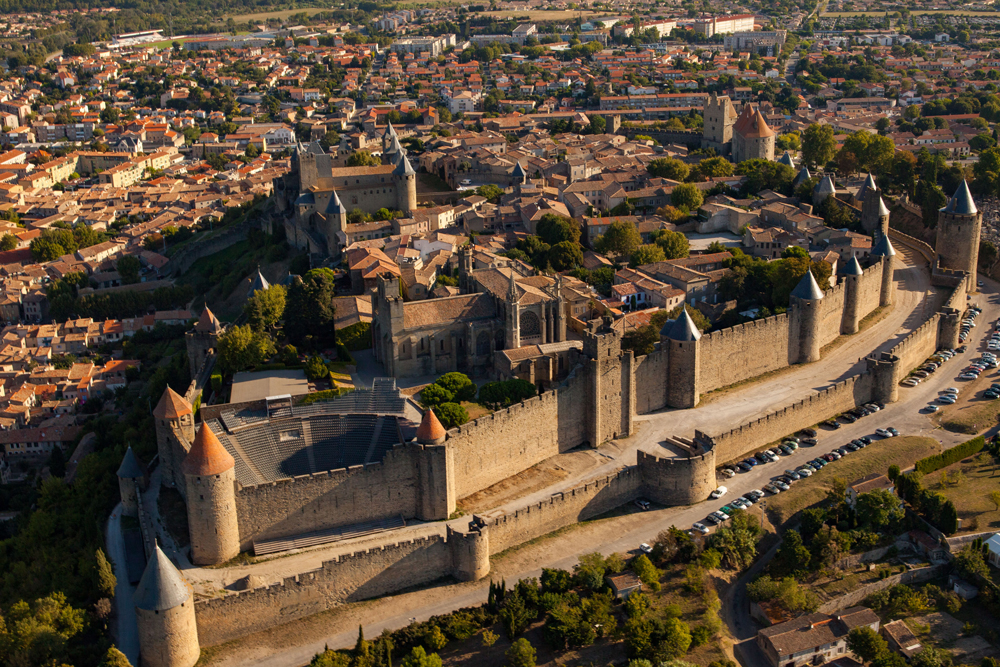
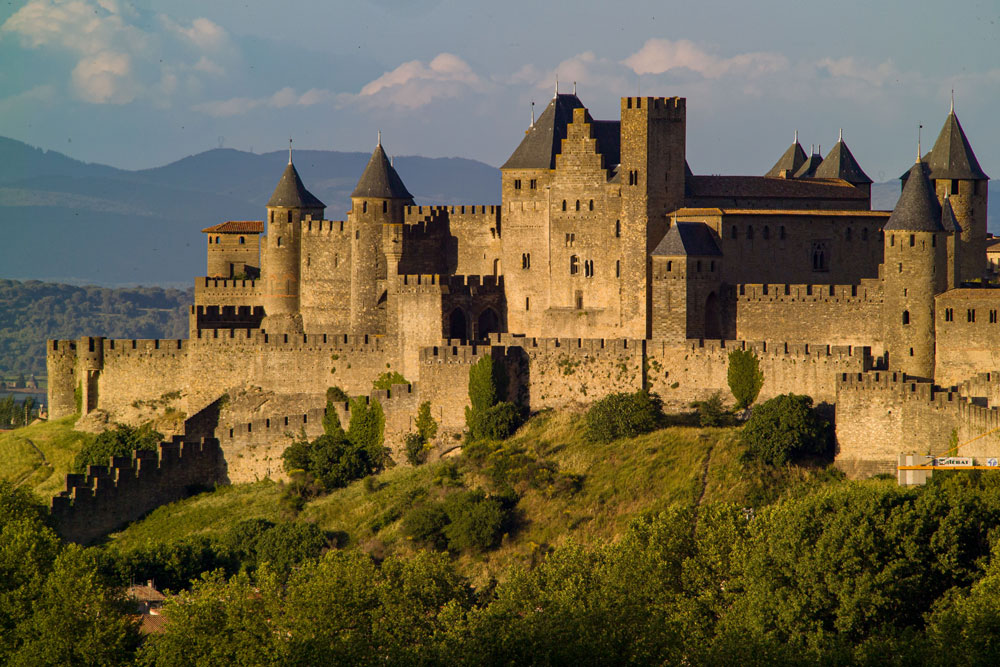
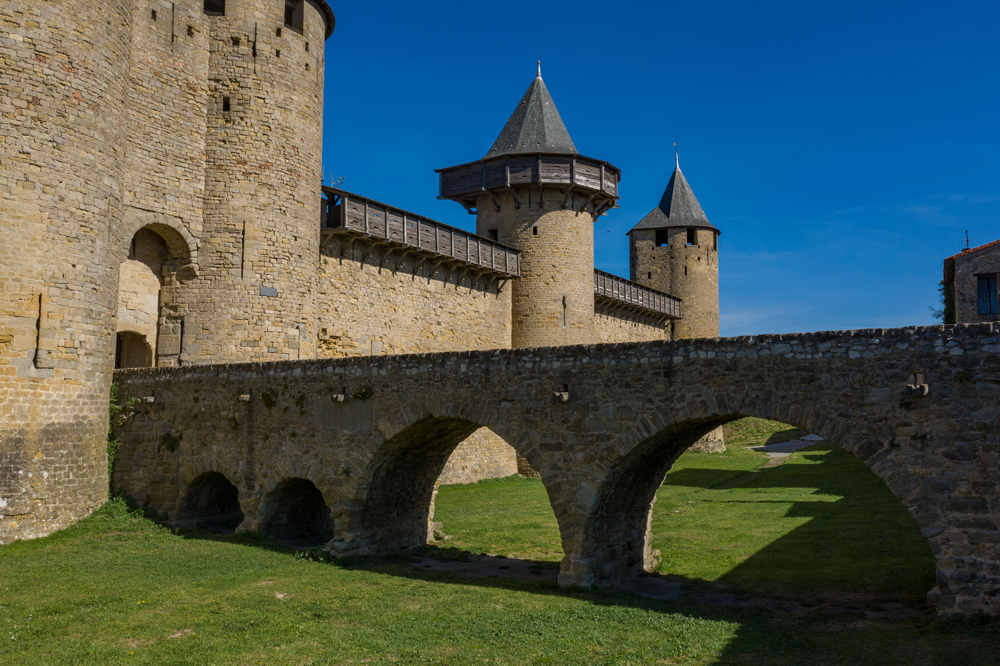
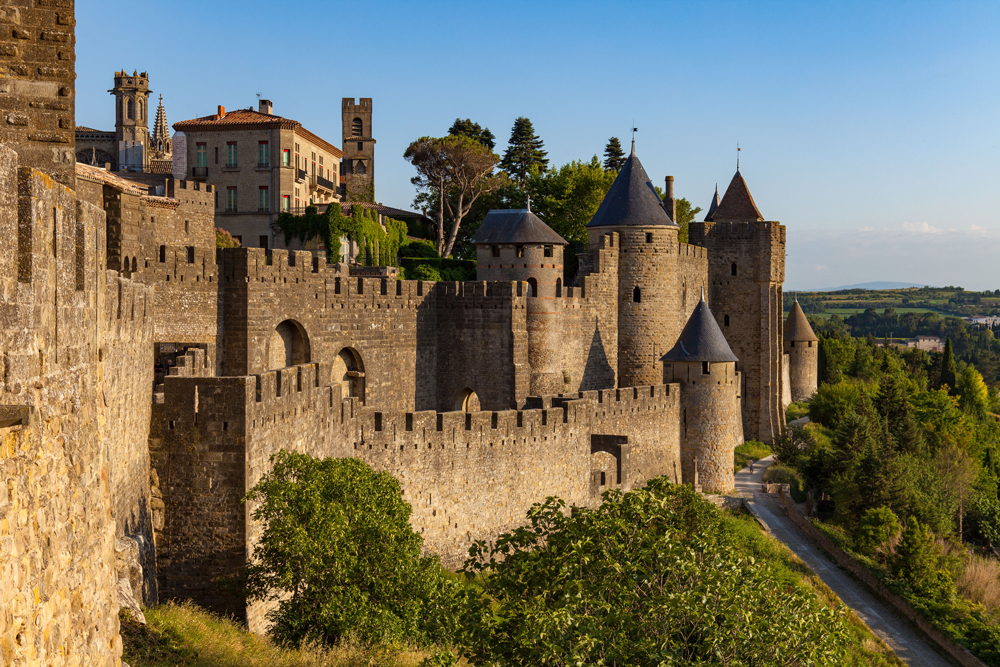
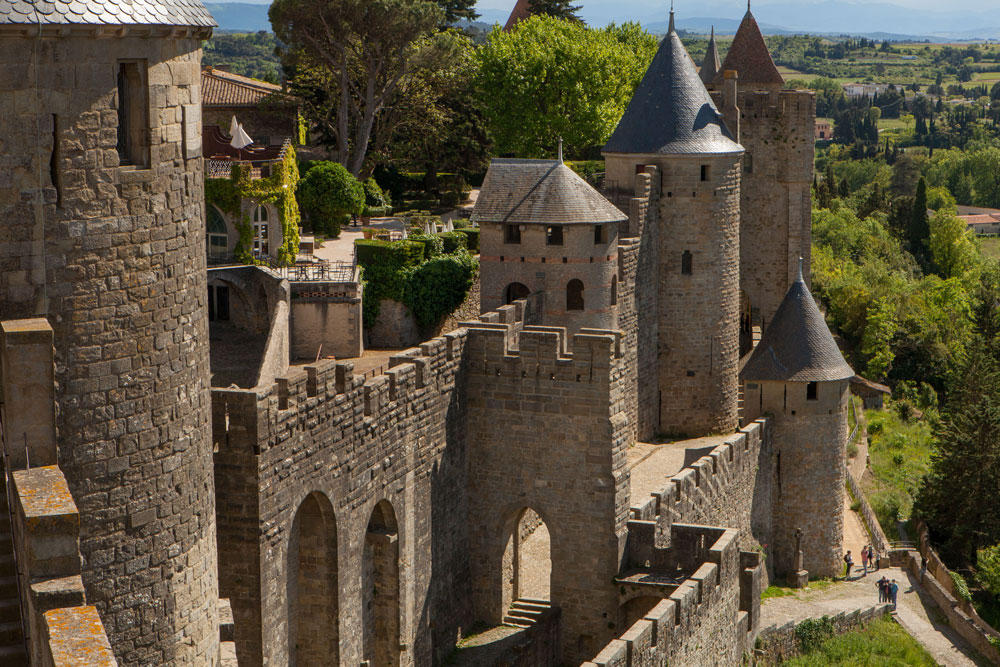
As it appears today, entirely restored by Viollet-le-Duc in the 19th century, the medieval city of Carcassonne stands as the perfect archetype of the defensive system designed by the king in the 13th century. It is a royal, proclamatory architecture, designed to impress and deter the enemy, but also to symbolically crush any attempt at rebellion among these new populations subjected to the Kingdom of France following the crusades. With its fortified castle, its double enclosure totaling nearly 3 km of ramparts, its 52 towers, its 1,300 arrow slits, its four entrances preceded by barbicans, and its perfectly restored murder holes or hoardings, the City constitutes an extraordinary defensive model, whose innovative techniques were adopted for the construction of royal mountain fortresses. A visit to Carcassonne therefore offers essential insight for understanding the architectural cohesion of the eight sites nominated for inscription on the UNESCO World Heritage list and better appreciating the exceptional universal value of this ensemble of monuments.
The city’s fortifications currently consist of three concentric ensembles, dating mostly from the 13th century:
THE CASTLE
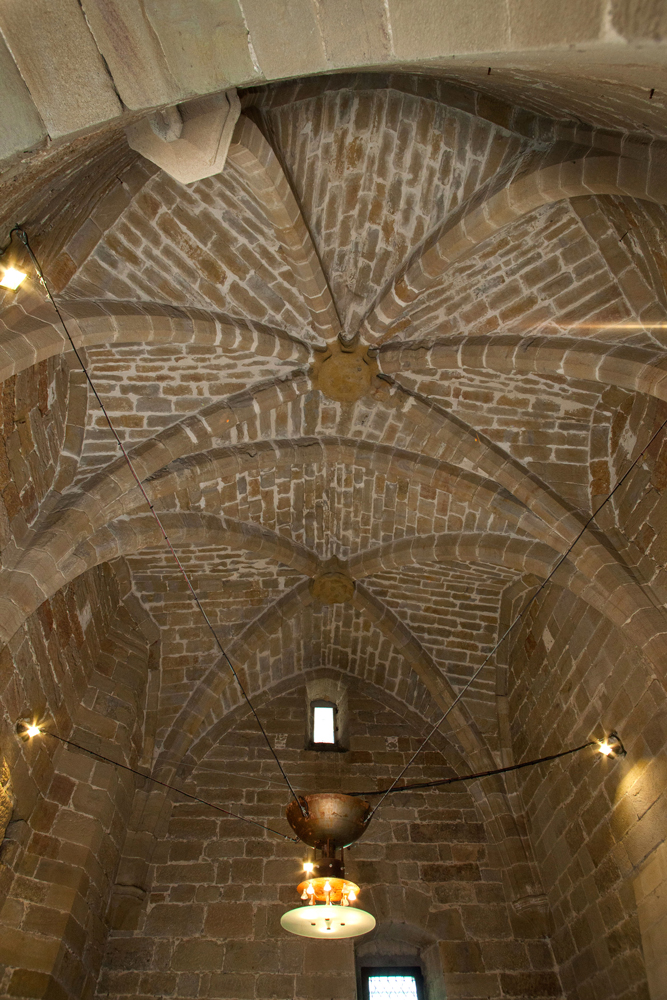
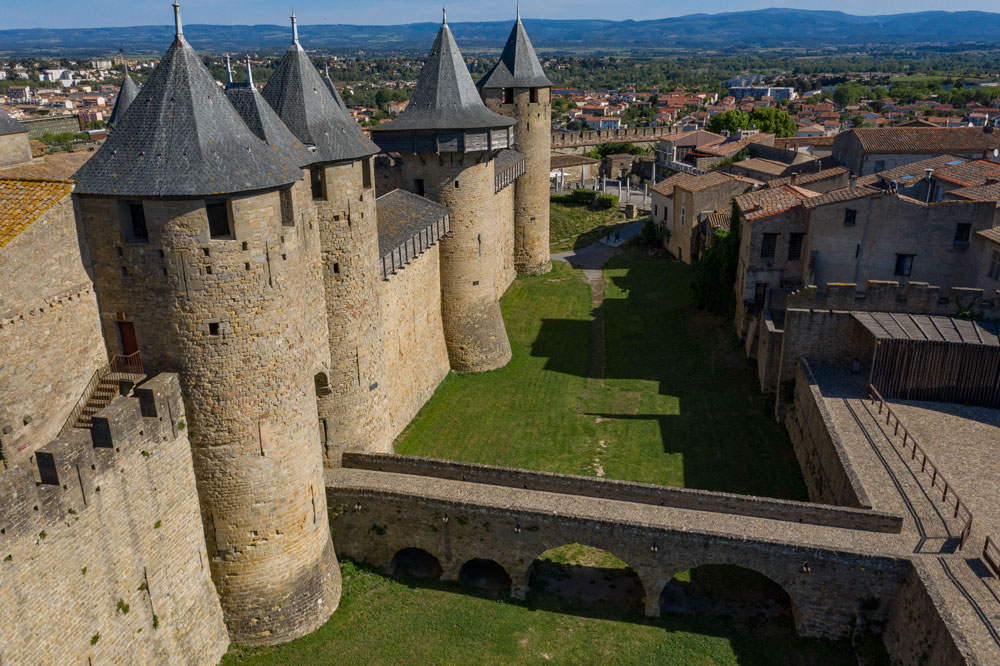
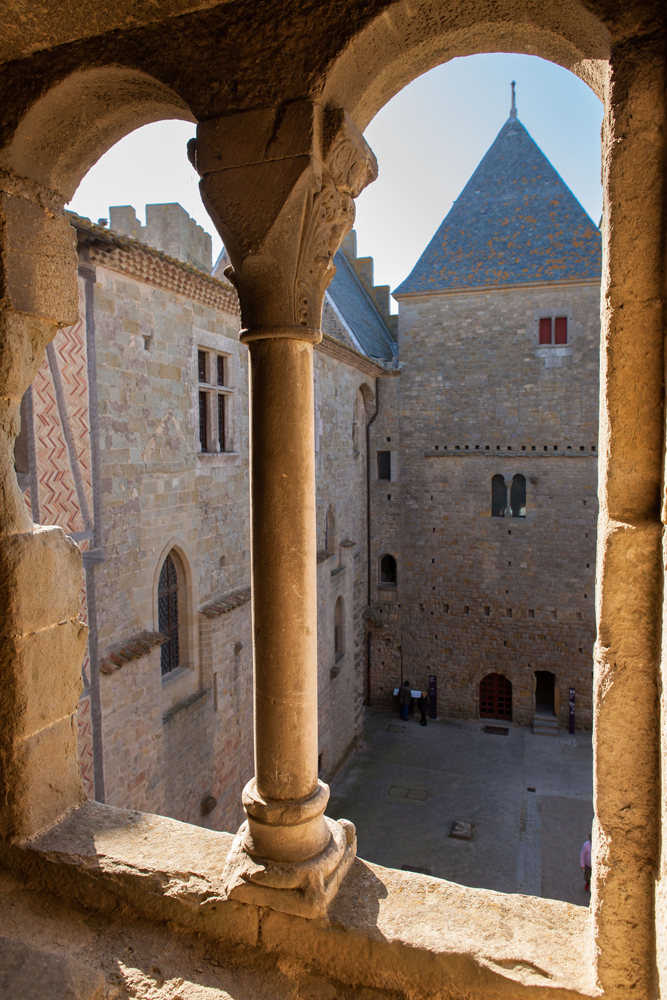
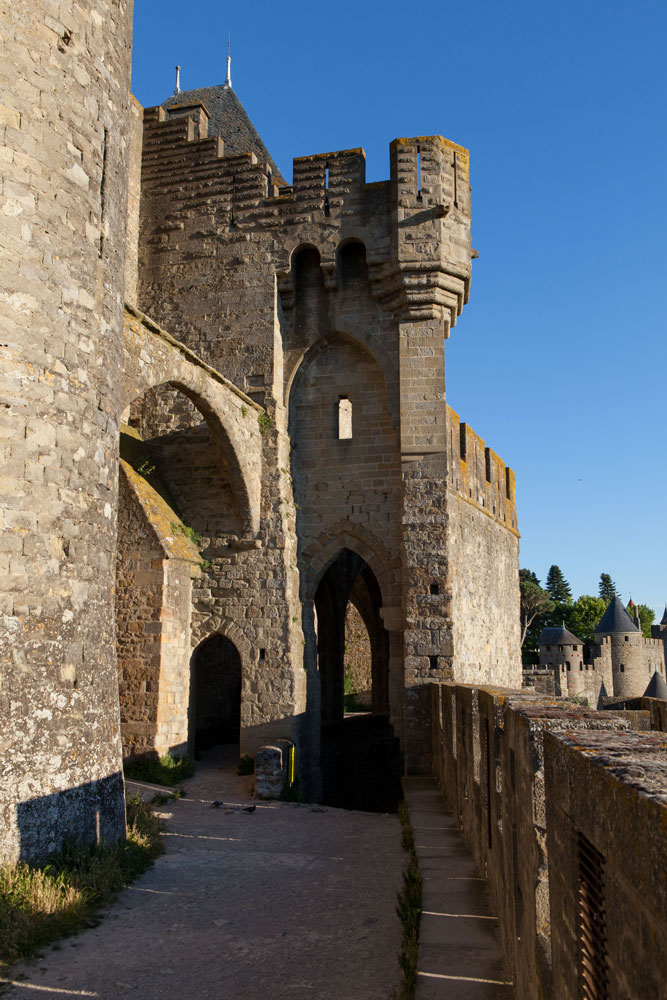
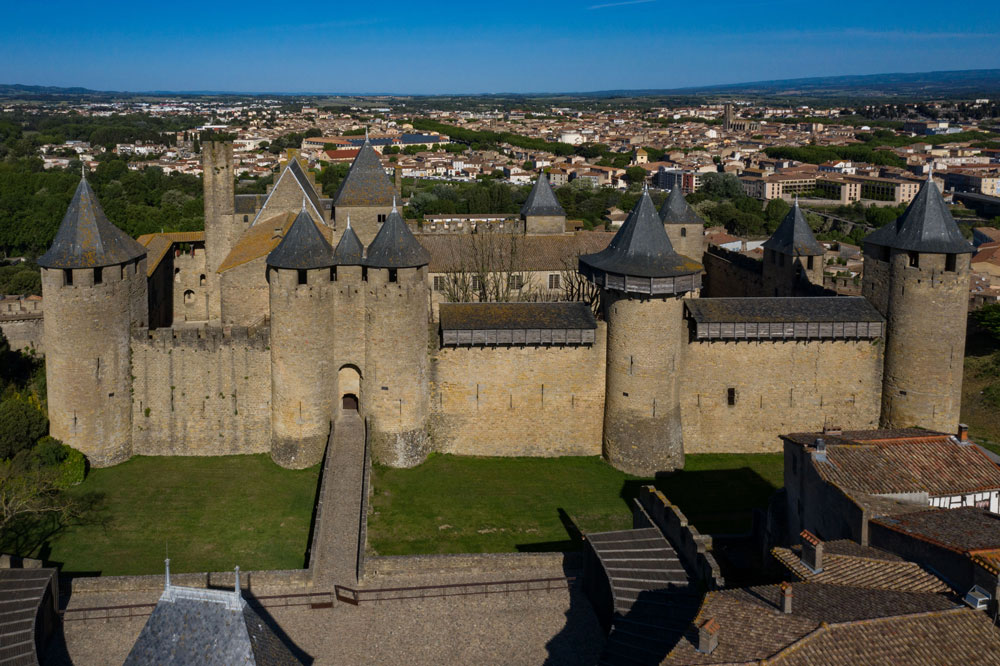
Located in the western part of the inner enclosure, it is surrounded by a quadrangular wall nearly 3 m thick and flanked by semi-circular towers, which protect two inner courtyards, two dwellings, two main towers, and a chapel that has since disappeared. The interior buildings, readapted to the new defensive design, are accessible via a twin-towered gatehouse, preceded by a barbican and a moat. Completely redeveloped, the former viscount’s palace became, in the 13th century, a true fortress in itself, with its high walls crowned with hoardings, partially restored during the 19th-century renovations. These wooden balconies housed the defenders and allowed them to multiply firing angles, including vertical control of the ramparts.
THE CASTLE
Located in the western part of the inner enclosure, it is surrounded by a quadrangular wall nearly 3 m thick and flanked by semi-circular towers, which protect two inner courtyards, two dwellings, two main towers, and a chapel that has since disappeared. The interior buildings, readapted to the new defensive design, are accessible via a twin-towered gatehouse, preceded by a barbican and a moat. Completely redeveloped, the former viscount’s palace became, in the 13th century, a true fortress in itself, with its high walls crowned with hoardings, partially restored during the 19th-century renovations. These wooden balconies housed the defenders and allowed them to multiply firing angles, including vertical control of the ramparts.
THE INNER ENCLOSURE
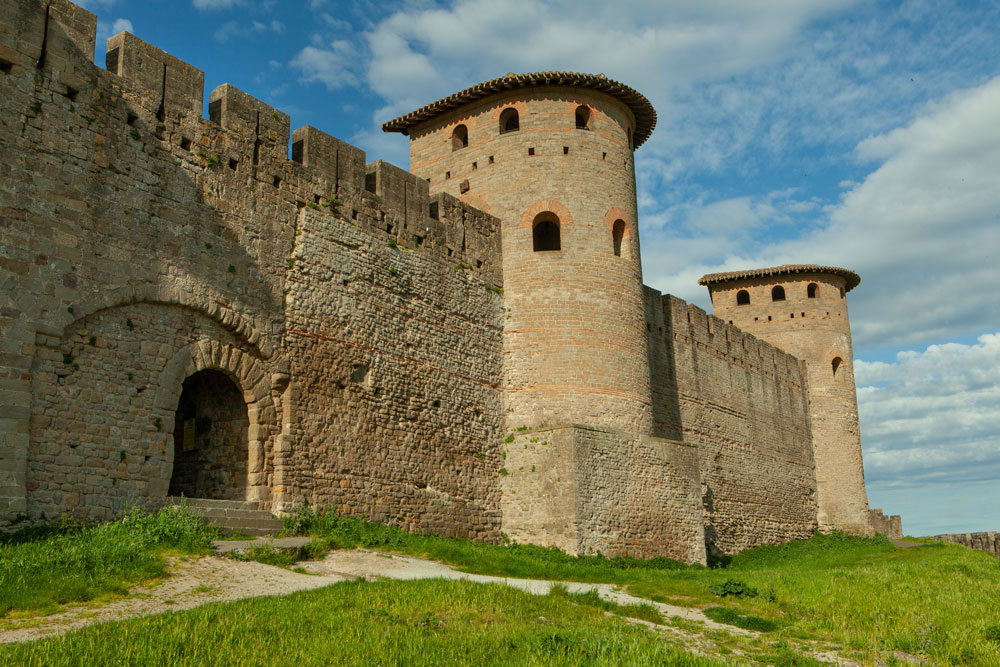
An ancient defense, it was ingeniously readapted in the 13th century, relying on the remains of Roman walls and towers, whose vestiges are still visible in many places (rows of bricks, small quadrangular stones). Two parts of the layout, to the north and south of the ensemble, were modified to accentuate their spur function, and some towers were rebuilt. Towards the end of the century (around 1270-1287), the defense was considerably improved by the construction of powerful gates, such as the Narbonnaise Gate, an enormous twin-towered gatehouse, or the Saint-Nazaire Gate with its angled access, to the south. Among the other towers and sections of the enclosure, we can also mention the Balthazar Tower and the Bishop’s Square Tower, adorned with rusticated stones.
THE OUTER ENCLOSURE
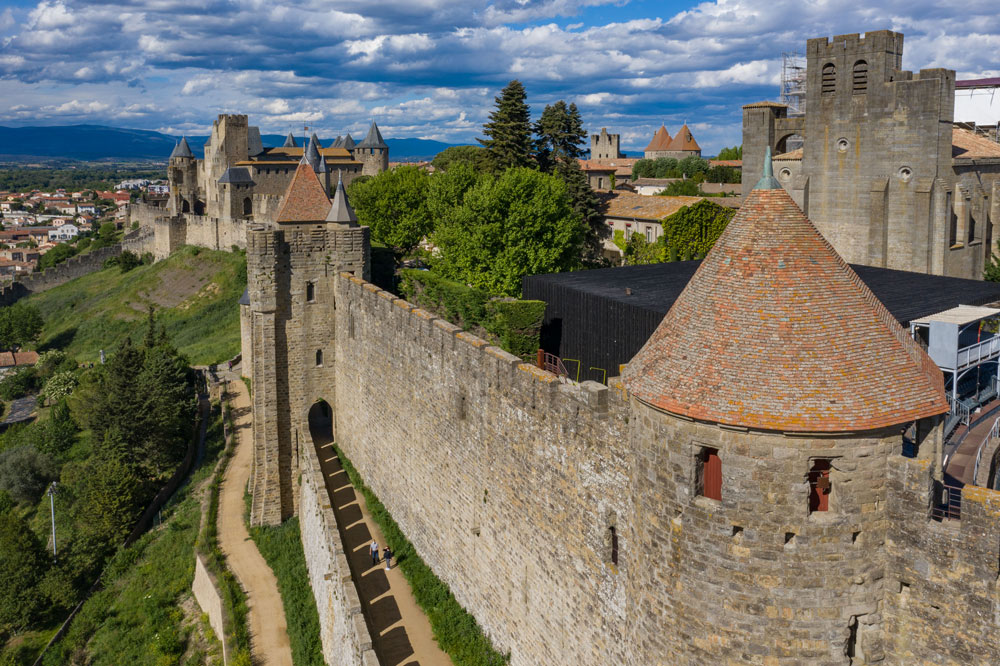
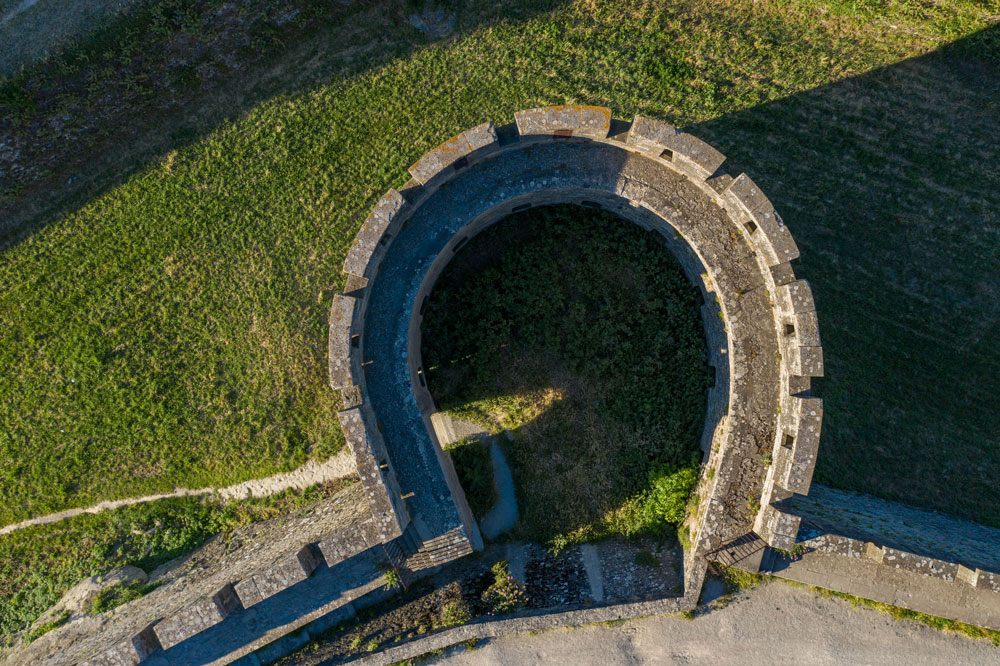
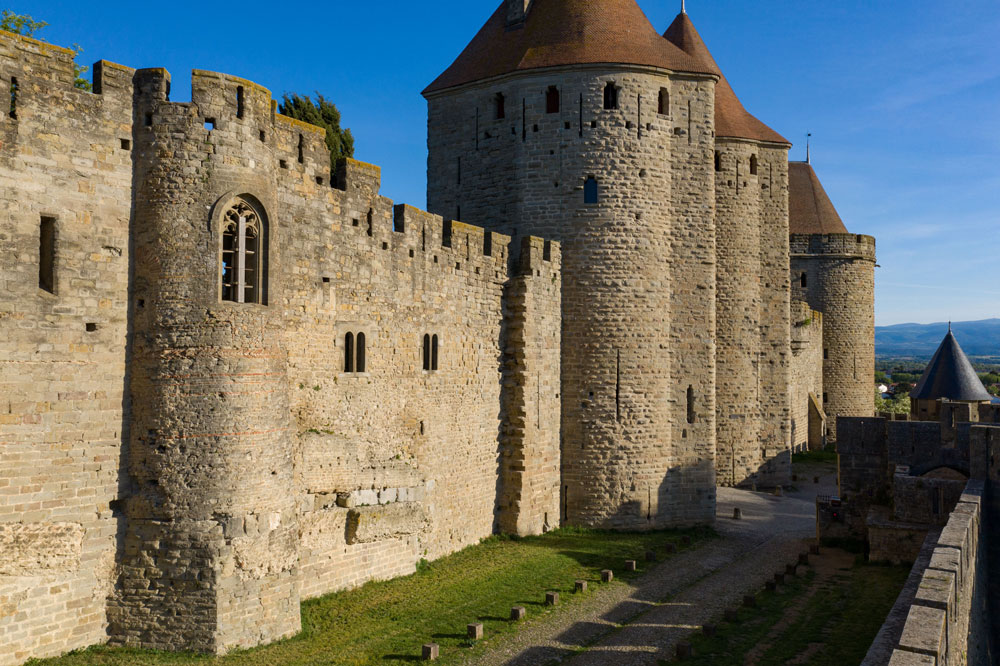
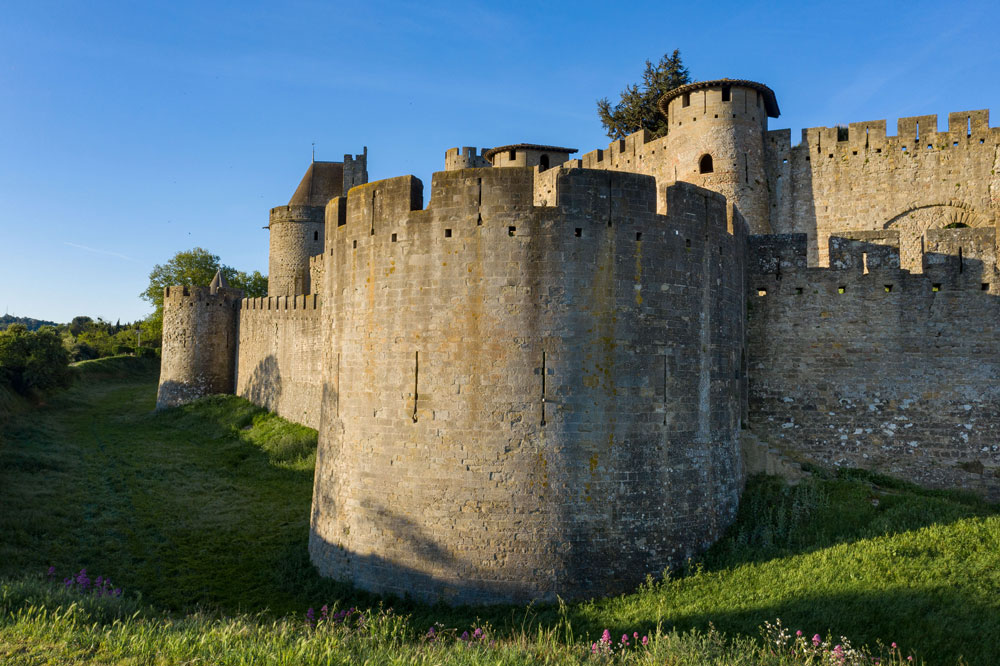
Built very rapidly in the 13th century, it provided better defense for the City by doubling the previous one, which was deemed insufficient. With a perimeter of 1672 m, the wall is flanked by circular or semi-circular towers, most often “open at the gorge” to prevent the enemy from entrenching themselves there if this first line of fortification was breached. In the same vein of protecting the defensive lines, this first enclosure is lower than the second, leaving the enemy completely vulnerable to fire from defenders positioned above them on the walls and towers of the inner enclosure. Finally, it is on this first line of fortification that the four barbicans protecting the four gates were built, the main one, to the west, having disappeared today.
THE OUTER ENCLOSURE
Built very rapidly in the 13th century, it provided better defense for the City by doubling the previous one, which was deemed insufficient. With a perimeter of 1672 m, the wall is flanked by circular or semi-circular towers, most often “open at the gorge” to prevent the enemy from entrenching themselves there if this first line of fortification was breached. In the same vein of protecting the defensive lines, this first enclosure is lower than the second, leaving the enemy completely vulnerable to fire from defenders positioned above them on the walls and towers of the inner enclosure. Finally, it is on this first line of fortification that the four barbicans protecting the four gates were built, the main one, to the west, having disappeared today.
THE LISTS
The inner and outer enclosures are separated by lists, an open and clear space that allowed the enemy to be trapped and which was probably originally divided by transverse walls to further slow down the attackers’ progress.
The fortress in pictures