conservation
 Accueil > Manage > The 8 commitments >
 Preserving and transmitting an exceptional architectural heritage

The Royal Fortresses of Languedoc form a serial property composed of eight monuments. The conservation of these structures, their preservation, and the transmission of this heritage to future generations constitute the primary objective of their inscription on the UNESCO World Heritage list →
Built or remodeled in the 13th century and little altered since, the fortresses are exposed to the vagaries of time, climatic hazards, and tourist traffic; they are inexorably eroding. Extensive maintenance and conservation programs are therefore undertaken on the castles and their surroundings to preserve them, secure them, and enhance their value. Heritage architects and landscape designers work together to propose phased work programs – sometimes spread over decades – that combine the stabilization of elevations, landscape enhancement, and site accessibility.
The numerous challenges raised by these works require the mobilization of various professions: firefighters, architects, archaeologists, landscape designers, naturalists, forestry technicians… all under the supervision of state professionals.

Intervening with respect for the OUV, integrity, and authenticity of the property
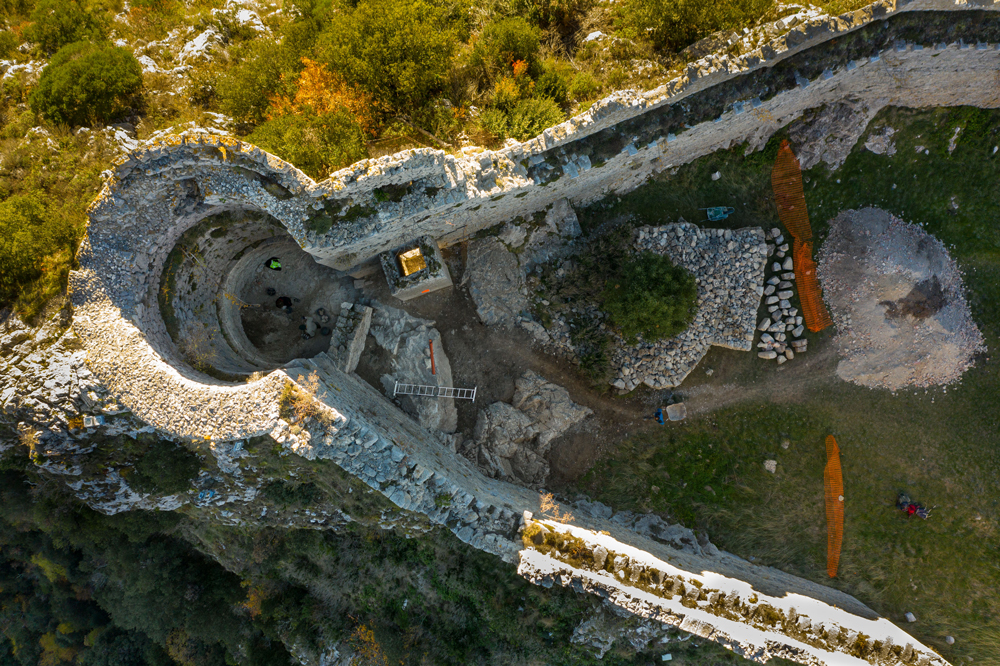
All the fortresses were built at the same time and according to a truly emblematic – almost standardized – model of military architecture. This particularity gives this series of eight monuments great homogeneity.
The contemporary interventions planned for the monuments aim not only to preserve the structures but also to reveal their architectural, organizational, functional, and landscape specificities. The enhancement of the different construction periods, and their particular treatment via various pointing techniques, for example, allows for a better revelation of the specificities of royal construction. Intelligent vegetation management can contribute to better legibility of the edifice, the topography of the site, and promote the discovery of the monument.
The homogeneous and serial nature of this network of monuments requires this ‘serial property’ to be considered as a whole. Therefore, interventions are carried out according to the same logic and a common philosophy – serving the respect for the Outstanding Universal Value of this ensemble.
Leveraging digital technologies to better manage the sites
The planning of interventions and the definition of management actions require detailed prior knowledge of the structures and their environment. As part of the conservation work on the monuments, the systematization of architectural and photogrammetric surveys allows for extremely precise identification of observed damage on the elevations, and for prioritizing the works.
The use of building archaeology reveals the construction periods and highlights the authentic techniques and materials employed. The use of LIDAR® technology provides valuable information on the topography of the fortresses, the positioning of earlier remains or historical pathways, and even the evolution of vegetation cover.
The data thus collected and analyzed constitute a solid basis upon which all professionals working on the sites can rely. They also open up innovative perspectives in terms of heritage mediation tools.


