
management plan

 Accueil > Manage >
 World Heritage inscription is based not only on the recognition of the property’s Outstanding Universal Value but also on the managers’ ability to protect, enhance, and transmit it to future generations. It is with this objective that the management plan was developed.
A Shared Roadmap for Property Management

Designed as a true operational roadmap, the management plan details all actions to be implemented to ensure the preservation of the royal fortresses of Languedoc and their landscape environment.
The numerous challenges it addresses make this document a tool for the sustainable development of the territories, part of a long-term vision.
Its application must enable anticipation of contemporary developments and address new challenges facing this territory: climate change, ecological transition, social inclusion, biodiversity preservation, responsible tourism, and economic viability…
A Participatory Development Approach Across an Entire Territory
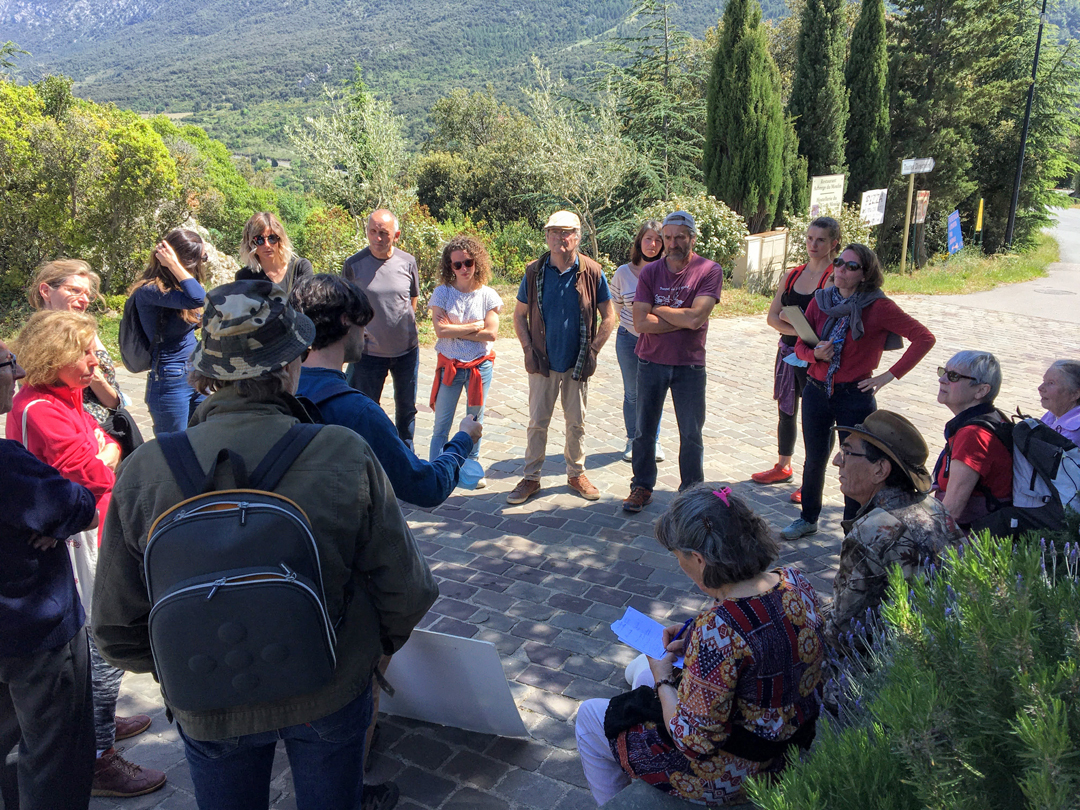
The development of the management plan for the royal fortresses of Languedoc spanned three consecutive years (2020-2023) and involved a multidisciplinary team of heritage architects, urban planners, landscape architects, sociologists, archaeologists, and geomaticians, coordinated by AMPM.
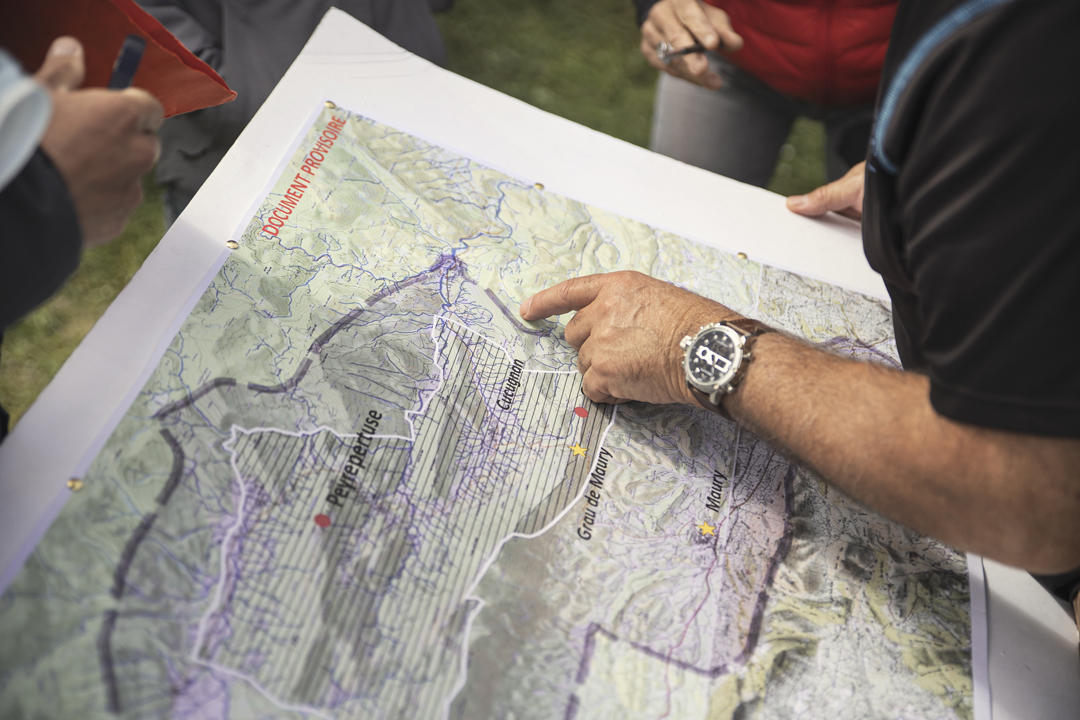
Each stage involved genuine public consultation through workshops, landscape walks, and meetings engaging residents, professionals, elected officials, site managers, and all territorial partners.
The development of the management plan for the royal fortresses of Languedoc spanned three consecutive years (2020-2023) and involved a multidisciplinary team of heritage architects, urban planners, landscape architects, sociologists, archaeologists, and geomaticians, coordinated by AMPM.
Each stage involved genuine public consultation through workshops, landscape walks, and meetings engaging residents, professionals, elected officials, site managers, and all territorial partners.
A Sociological Survey to Better Understand Population Expectations
Beyond essential heritage and landscape studies, the design of the serial property’s management plan was based on a preliminary sociological survey aimed at improving knowledge of the territory anchoring the World Heritage candidacy, in order to build an action program aligned with on-the-ground realities.
More specifically, the survey highlighted sociodemographic characteristics and helped understand the social functioning of the territory, assess the place of the fortresses in collective imaginaries, qualify modes of appropriation, perceptions, and uses, and identify population expectations.
Eight Commitments and 33 Actions for the Serial Property
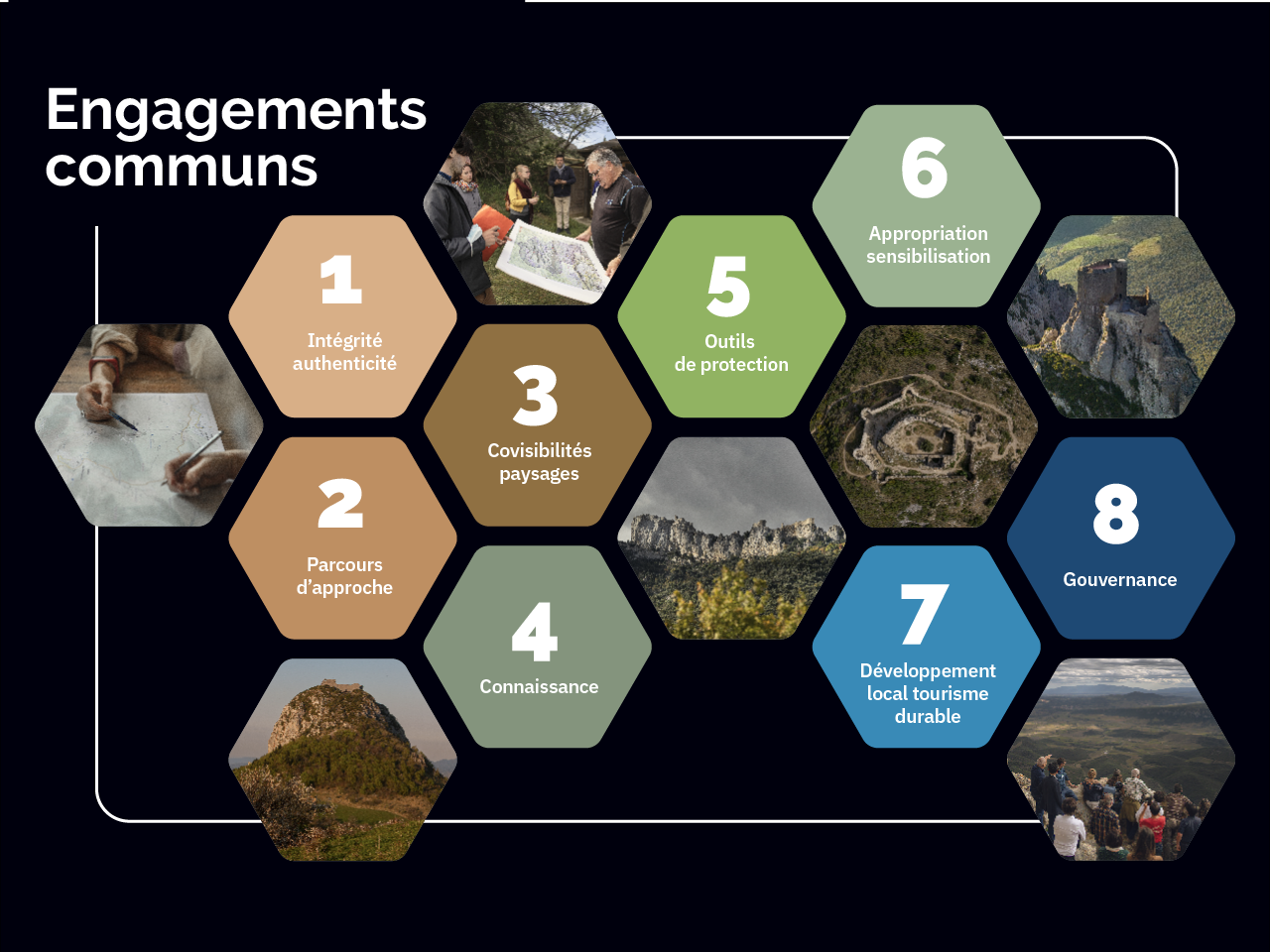
Ultimately, the management plan is structured around eight major commitments that guide management orientations and lead to an action program designed for a twelve-year period (2022-2034).
In addition to the 33 actions established for the serial property, specific action plans are added for each of the eight fortresses. Its implementation is coordinated by AMPM and relies on joint intervention from local authorities and state services.
The action program is subject to a regular evaluation procedure based on thematic monitoring indicators specific to each commitment.
A Commitment Charter Involving All Stakeholders

Adopted and officially ratified in 2022 by all local authorities and stakeholders involved in the initiative, the commitment charter constitutes the moral contract between all local and national managers, as well as all partners involved in the preservation of the monuments and the transmission of their Outstanding Universal Value to future generations.
As a true framework document, this charter stipulates that each local authority and all territorial management stakeholders, within their respective areas of competence, commit to implementing the major management orientations defined for the serial property based on a principle of collective solidarity and intelligence; the defense and enhancement of these sites can only be guaranteed through broad cooperation among all concerned stakeholders.
More than just a preservation tool, the management plan embodies a genuine territorial project.
Adopted and officially ratified in 2022 by all local authorities and stakeholders involved in the initiative, the commitment charter constitutes the moral contract between all local and national managers, as well as all partners involved in the preservation of the monuments and the transmission of their Outstanding Universal Value to future generations.
As a true framework document, this charter stipulates that each local authority and all territorial management stakeholders, within their respective areas of competence, commit to implementing the major management orientations defined for the serial property based on a principle of collective solidarity and intelligence; the defense and enhancement of these sites can only be guaranteed through broad cooperation among all concerned stakeholders.
More than just a preservation tool, the management plan embodies a genuine territorial project.

