governance
 Accueil > Manage > The 8 commitments >
 The implementation and monitoring of the management plan require the mobilization and involvement of a large number of stakeholders – each “contributing their part” to the construction of a collegiate governance system dedicated to enhancing the fortresses.
Facilitating a Shared Governance System

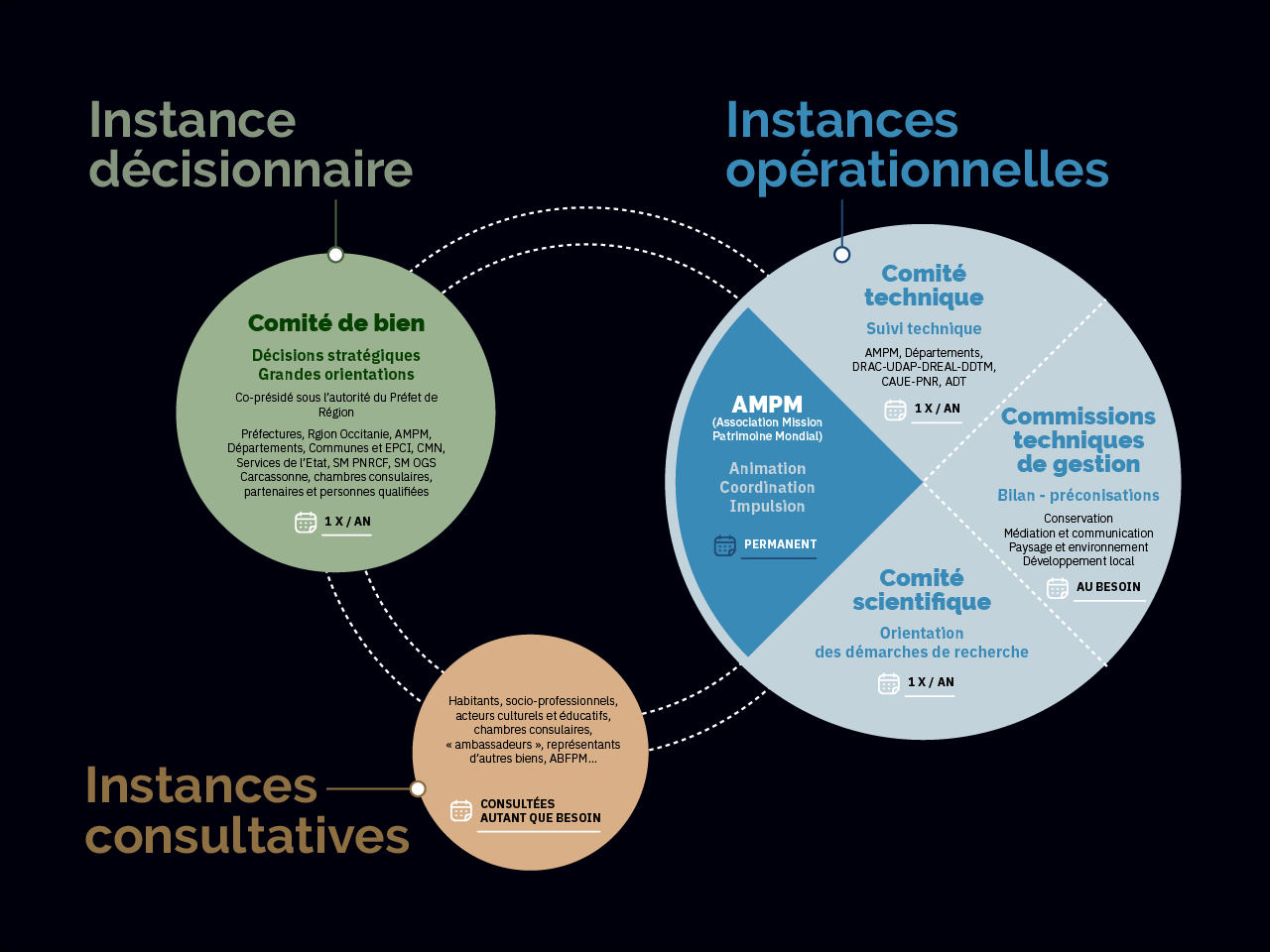
The governance system responsible for monitoring and implementing the management plan is composed of an interconnected structure of various political and technical bodies that interact with each other.
The AMPM, at the Heart of the Initiative’s Coordination and Steering
The World Heritage Mission Association (AMPM) ensures the coordination and steering of the entire candidacy process. It unites and coordinates all project stakeholders. Chaired by the Aude Department, it comprises eighteen local authorities and associated members involved in the project: eight municipalities, six inter-municipal communities, two departments, one region, the Centre des Monuments Nationaux, a Regional Natural Park, a joint management syndicate, and the scientific committee.
As the procedure progressed, it welcomed some of the neighboring local authorities and municipalities located within the visual catchment area of the fortresses. Strong in its territorial involvement and direct link with site managers, the AMPM ensures the deployment of the management plan and guarantees the preservation of the fortresses’ VIEW.
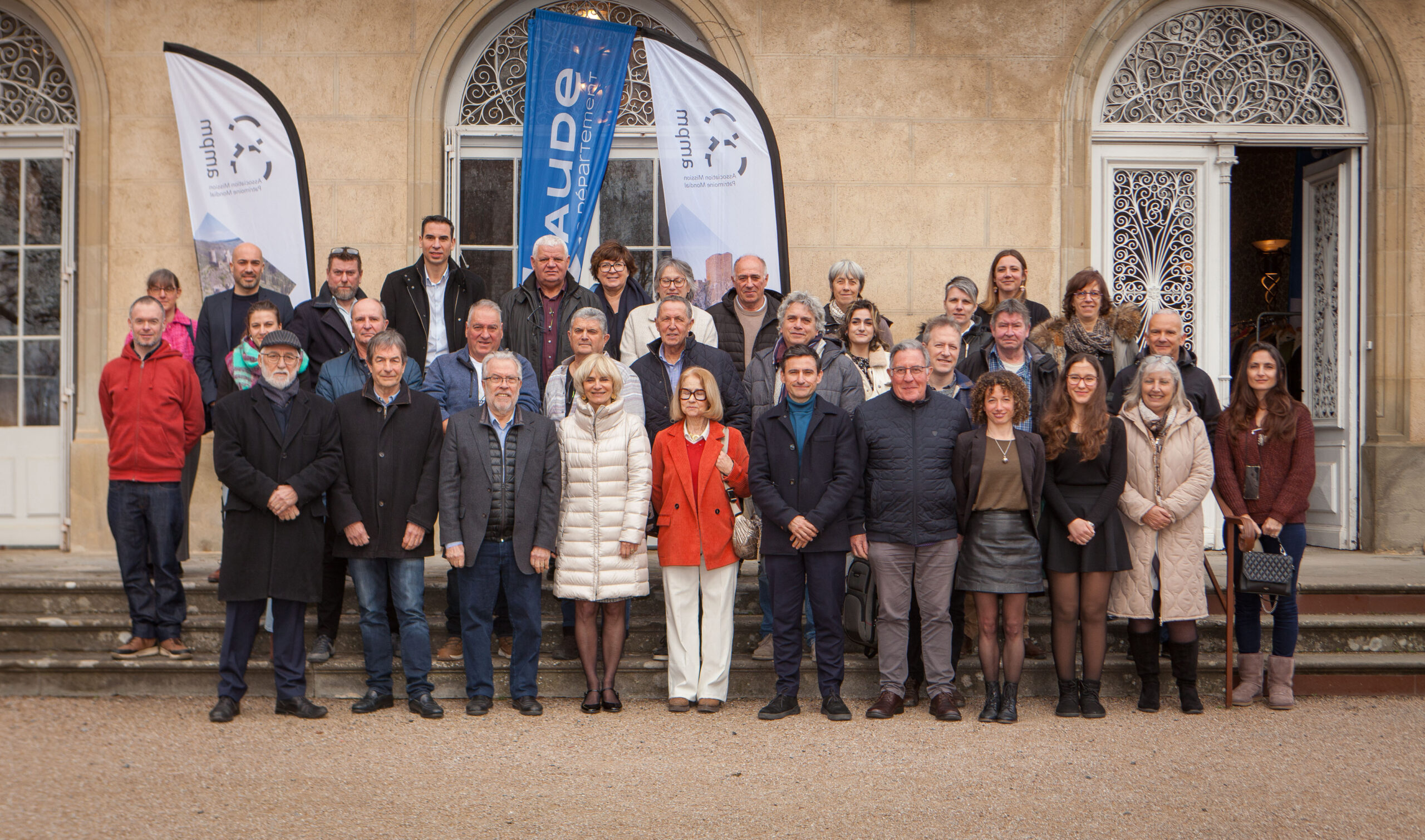
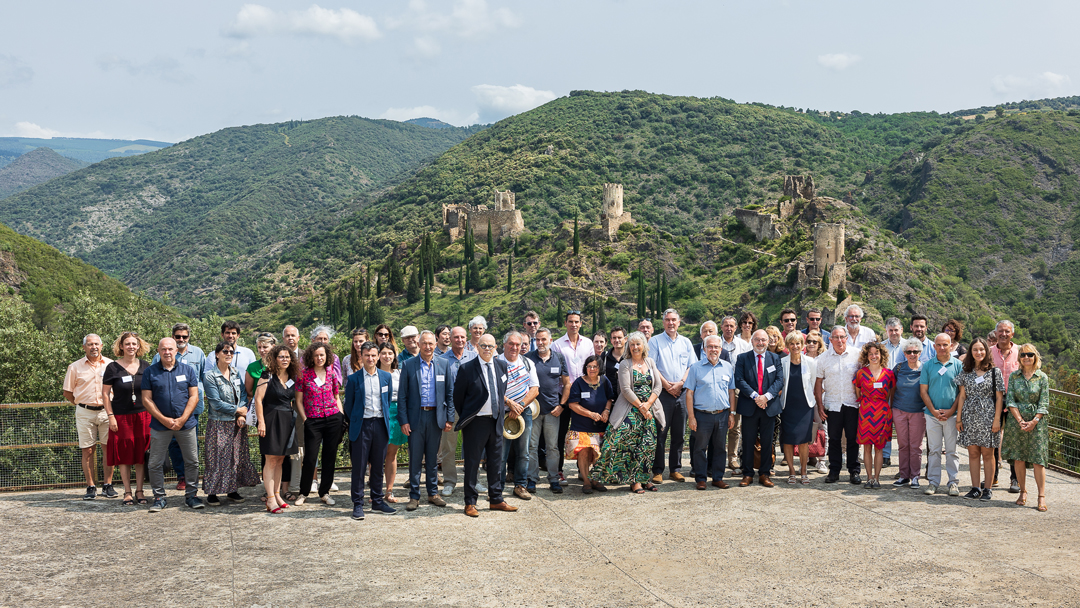
The Property Committee or the Political Decision-Making Body
The property committee constitutes the steering decision-making body. It is a steering committee that validates the strategic directions of the initiative and ensures the implementation of the management plan’s commitments. The interdepartmental nature of the serial property places the property committee under the authority of the Regional Prefect.
The Prefect is assisted in his mission by three vice-presidencies, respectively held by the President of the Occitanie Regional Council, the President of the Aude Department, and the delegated president of the AMPM. The property committee brings together all members of the AMPM, in addition to all partners, institutions, services, and territorial structures working for the management of the fortresses. It meets once a year.
The Property Committee or the Political Decision-Making Body
The property committee constitutes the steering decision-making body. It is a steering committee that validates the strategic directions of the initiative and ensures the implementation of the management plan’s commitments. The interdepartmental nature of the serial property places the property committee under the authority of the Regional Prefect.
The Prefect is assisted in his mission by three vice-presidencies, respectively held by the President of the Occitanie Regional Council, the President of the Aude Department, and the delegated president of the AMPM. The property committee brings together all members of the AMPM, in addition to all partners, institutions, services, and territorial structures working for the management of the fortresses. It meets once a year.
The Operational Technical Bodies
The technical, operational, and scientific monitoring of the management plan’s implementation is ensured by several technical and operational bodies: the management technical committee, thematic commissions, and the scientific committee, which intervene according to their specific competencies.
They are mobilized as needed.
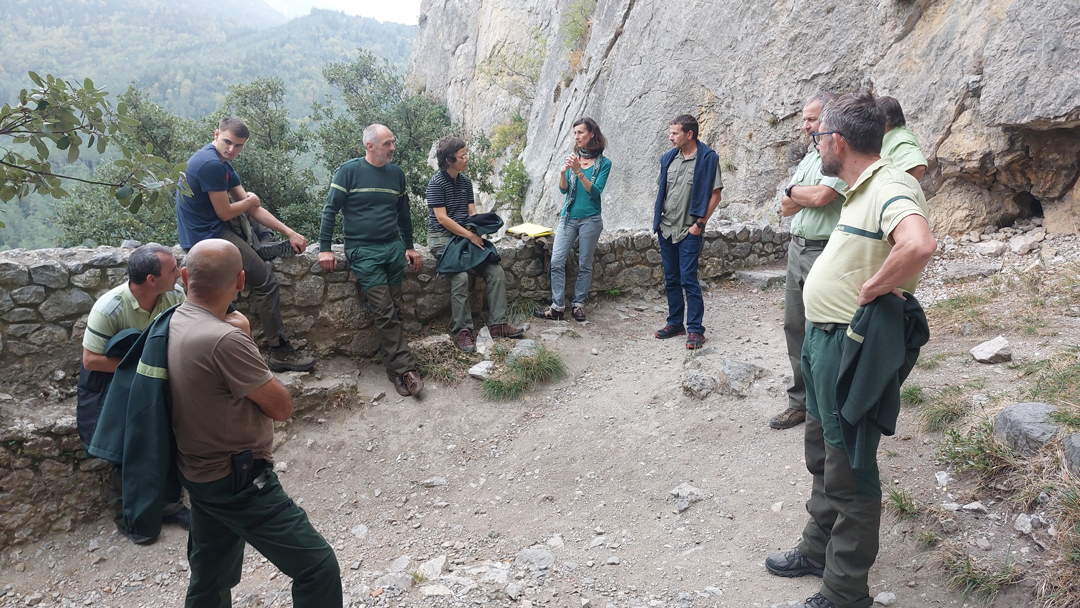
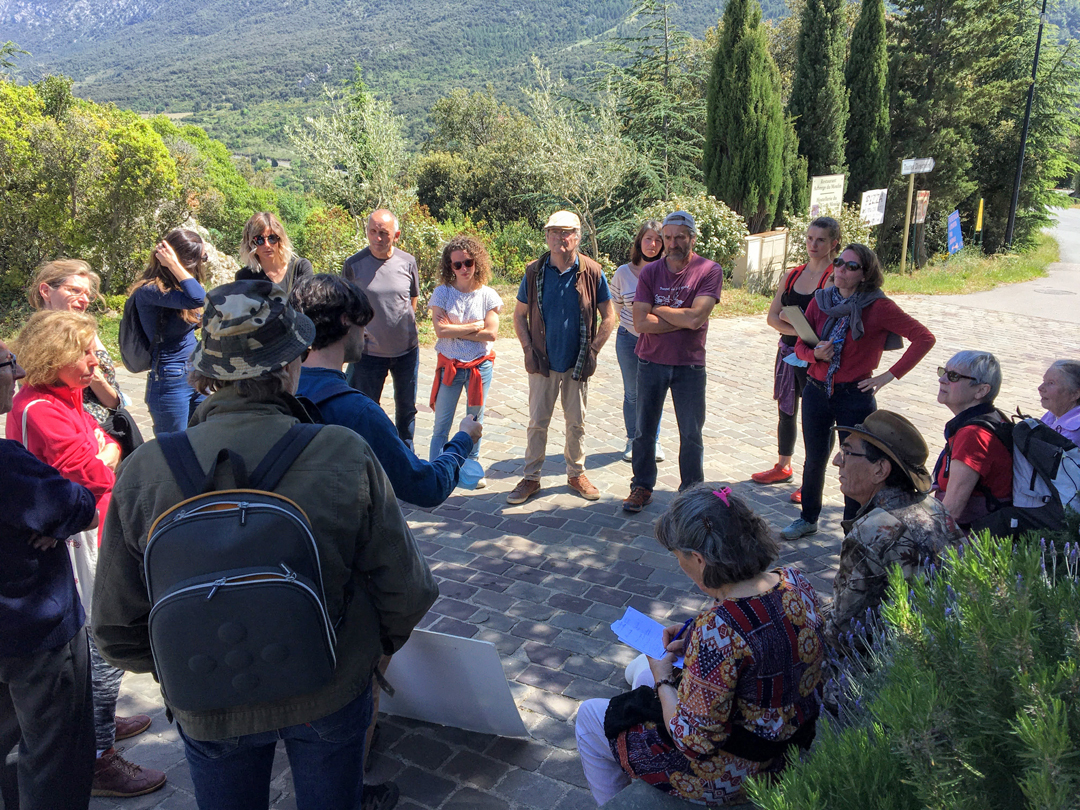
The Consultative Bodies
With a desire for co-construction, participation, and mobilization of all stakeholders in the management of the serial property, governance also relies on a panel of consultative bodies and partners.
Through these bodies, the inhabitants of the territory, socio-professionals, socio-educational actors, ambassadors, managers of other World Heritage properties, etc., are notably represented.
The Consultative Bodies
With a desire for co-construction, participation, and mobilization of all stakeholders in the management of the serial property, governance also relies on a panel of consultative bodies and partners.
Through these bodies, the inhabitants of the territory, socio-professionals, socio-educational actors, ambassadors, managers of other World Heritage properties, etc., are notably represented.