
Knowledge
 Accueil > Manage > The 8 commitments >
 The management of a property nominated or inscribed on the World Heritage List necessarily requires a thorough understanding of it. While there is a wealth of documentation and publications about the royal fortresses of Languedoc, recent research and studies still offer us some promising insights.
Establishing the scientific credibility of the nomination process

The process of inscription on the World Heritage List began with a strong symbolic act: the prior establishment of a scientific committee. This testifies to the project leaders’ desire to entrust the reflection to a panel of experts, and to rely primarily on scientific rigor and seriousness to advance the nomination.
Multidisciplinary in composition and international in scope, the scientific committee played an essential role in selecting the series of eight monuments, proposing the Outstanding Universal Value, and drafting the international comparative analysis. Still active, the committee ensures the scientific rigor of the process and the foundations of the inscription; it initiates and participates in research programs concerning the monuments.
Participating in international scientific research
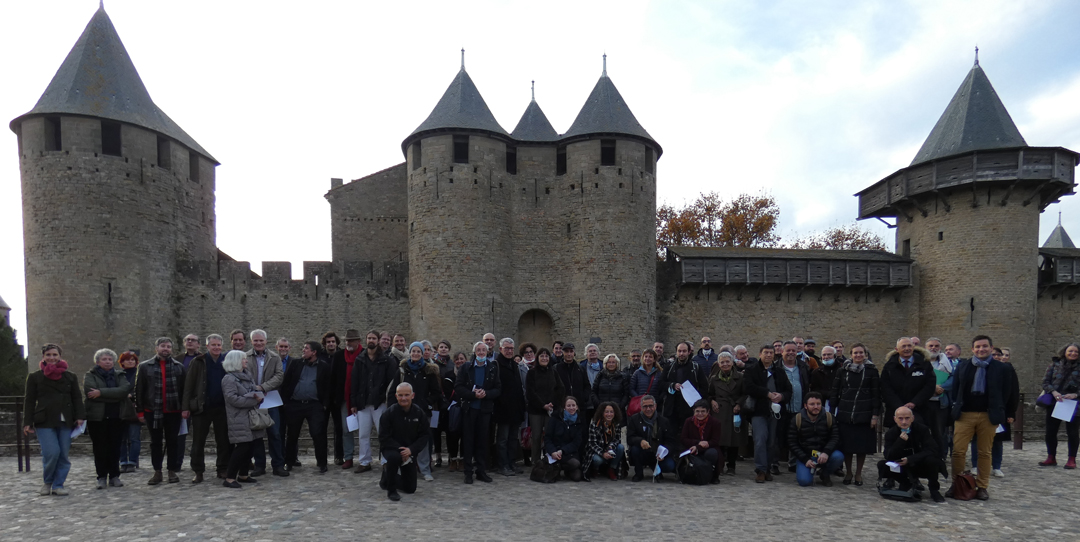
The international dimension of a World Heritage nomination necessarily implies a global perspective on research work; by comparing similar sites, cross-referencing analytical topics with a view to fostering experience sharing, raising the level of international research, and embracing a dimension of universalism.
International conferences are excellent means to compare analyses from scientific experts. Two symposiums were notably organized as part of the nomination.
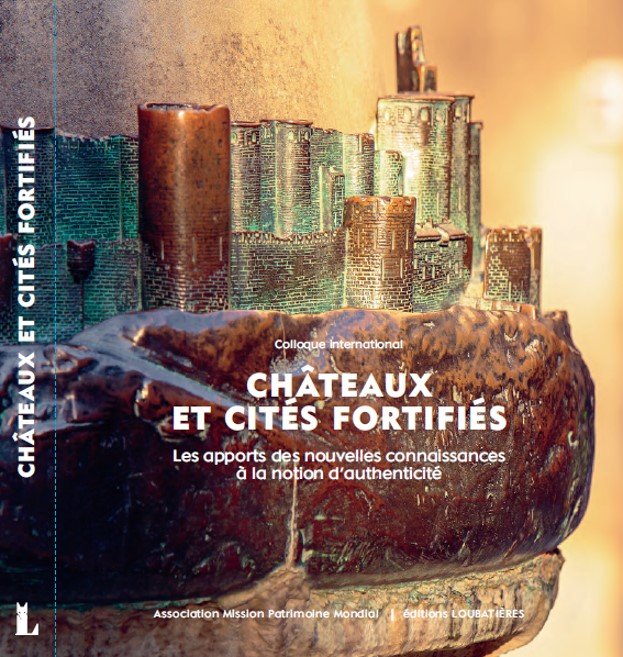
The first, in 2018, had as its main subject “Castles and Fortified Cities: The Contributions of New Knowledge to the Notion of Authenticity.” The 2021 one focused on “Fortification and Sovereign Powers (1180-1340): Fortified Architecture and Territorial Control in the 13th Century.”
The international dimension of a World Heritage nomination necessarily implies a global perspective on research work; by comparing similar sites, cross-referencing analytical topics with a view to fostering experience sharing, raising the level of international research, and embracing a dimension of universalism.
International conferences are excellent means to compare analyses from scientific experts. Two symposiums were notably organized as part of the nomination.
The first, in 2018, had as its main subject “Castles and Fortified Cities: The Contributions of New Knowledge to the Notion of Authenticity.” The 2021 one focused on “Fortification and Sovereign Powers (1180-1340): Fortified Architecture and Territorial Control in the 13th Century.”
Disseminating knowledge to the public
The research work carried out as part of the nomination is intended to be widely disseminated to the public. They enhance knowledge of the monuments, in terms of their historical, architectural, functional aspects, and their environment.
They also help to reinforce the justification for the inscription and the Outstanding Universal Value of the property. The proceedings of the two international conferences have been published. The nomination process aims to establish a genuine editorial policy for the purpose of transmitting and popularizing knowledge.
Fostering partnerships with academia and scientific communities
The Aude department, and more broadly the Occitanie Region, are endowed with a significant network of universities, schools of architecture, landscape design, and other research structures.
Their mobilization around specific subjects and themes related to the nomination also contributes to improving knowledge of the fortresses, through the implementation of specific study programs that enhance the nomination.
The resulting work can be disseminated or published.
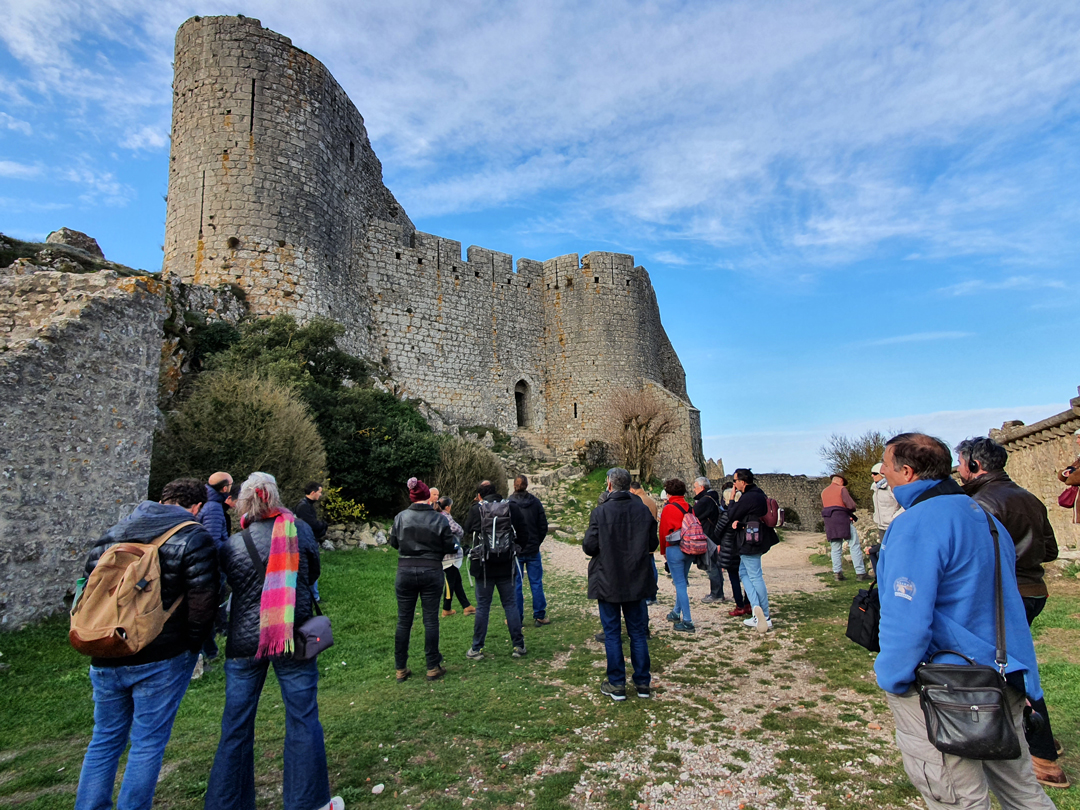
The Aude department, and more broadly the Occitanie Region, are endowed with a significant network of universities, schools of architecture, landscape design, and other research structures.
Their mobilization around specific subjects and themes related to the nomination also contributes to improving knowledge of the fortresses, through the implementation of specific study programs that enhance the nomination.
The resulting work can be disseminated or published.

