Local Development
 Accueil > Manage > The 8 commitments >
 Leveraging the candidacy for local development, and building upon the management plan to implement a regional project that addresses contemporary challenges of environmental transition, social inclusion, and economic sustainability, constitute significant ambitions for this territory, which is susceptible to structural social vulnerabilities.
Promoting a sustainable and positive-impact tourism model

Departing from a mass tourism model is essential to ensure the social acceptability of the inscription among local residents and to mitigate the adverse effects of induced tourist flows on the heritage value of the castles and their environment.
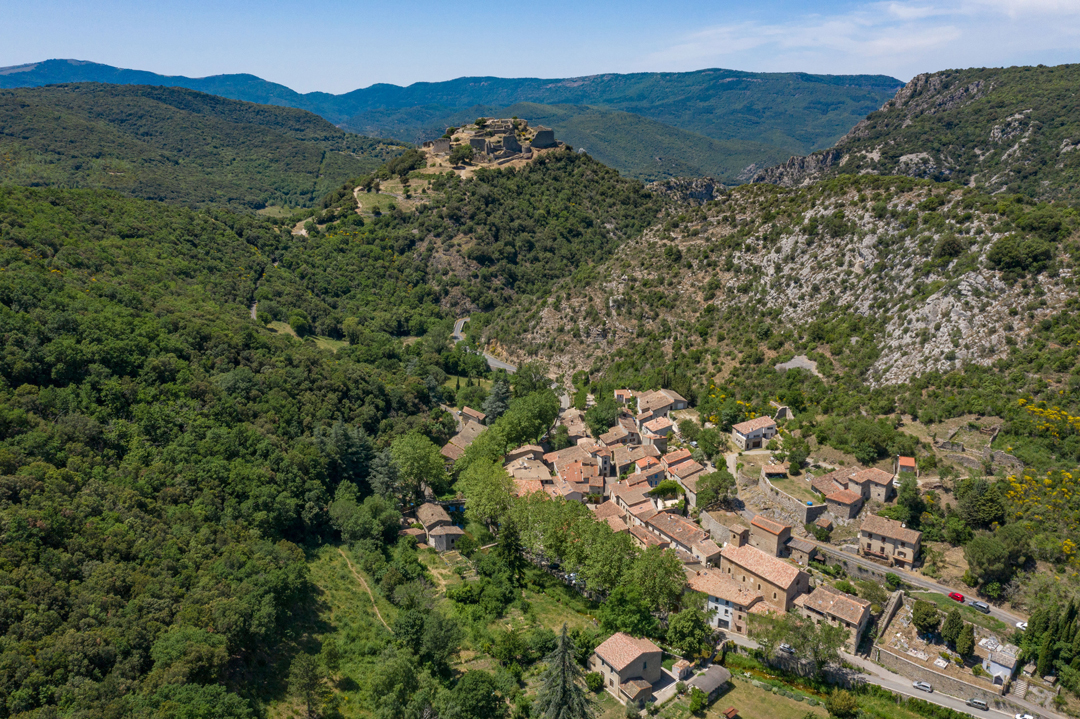
Promoting the Royal Fortresses of Languedoc as a unified tourist destination should enable a better distribution of visitors, foster direct and indirect economic benefits for the region, and contribute to the economic viability of these rural areas.
Such an endeavor necessitates efforts to better structure and expand the tourist and cultural offerings. It prompts a re-evaluation of tourism operational models and visitor reception strategies, benefiting both visitors and residents. Travel via low-carbon modes and “slow tourism” are actively encouraged.

Measuring and analyzing the potential and proven impacts of the inscription
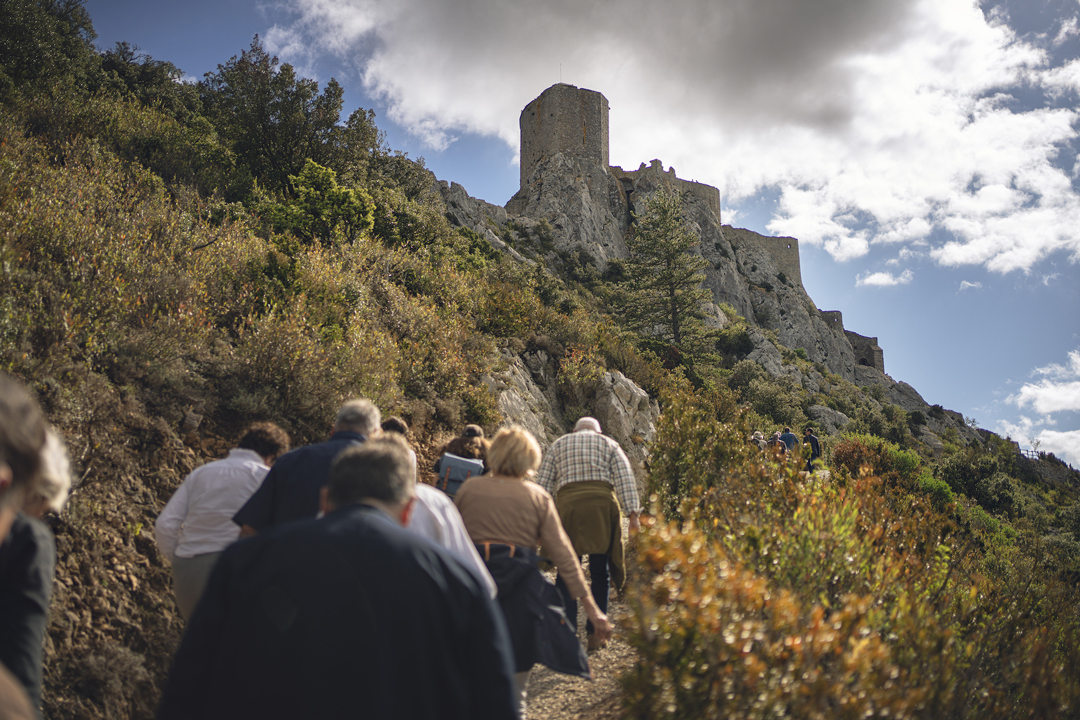
Anticipating the consequences of a World Heritage inscription also necessitates the implementation of analytical indicators – both quantitative and qualitative – to measure the potential and anticipated impacts of the inscription on the territory. This primarily involves monitoring site attendance, analyzing visitor demographics and practices, and enhancing understanding of public expectations. Furthermore, it entails establishing an innovative evaluation system capable of accounting for ecological and environmental impacts.
More complex, the evaluation of social impacts must enable the measurement of the residents’ engagement with the initiative and its Outstanding Universal Value (OUV), the evolution of the candidacy’s acceptability, and its repercussions on local community and cultural life.
Anticipating the consequences of a World Heritage inscription also necessitates the implementation of analytical indicators – both quantitative and qualitative – to measure the potential and anticipated impacts of the inscription on the territory. This primarily involves monitoring site attendance, analyzing visitor demographics and practices, and enhancing understanding of public expectations. Furthermore, it entails establishing an innovative evaluation system capable of accounting for ecological and environmental impacts.
More complex, the evaluation of social impacts must enable the measurement of the residents’ engagement with the initiative and its Outstanding Universal Value (OUV), the evolution of the candidacy’s acceptability, and its repercussions on local community and cultural life.
Making the candidacy a vehicle for social inclusion and development
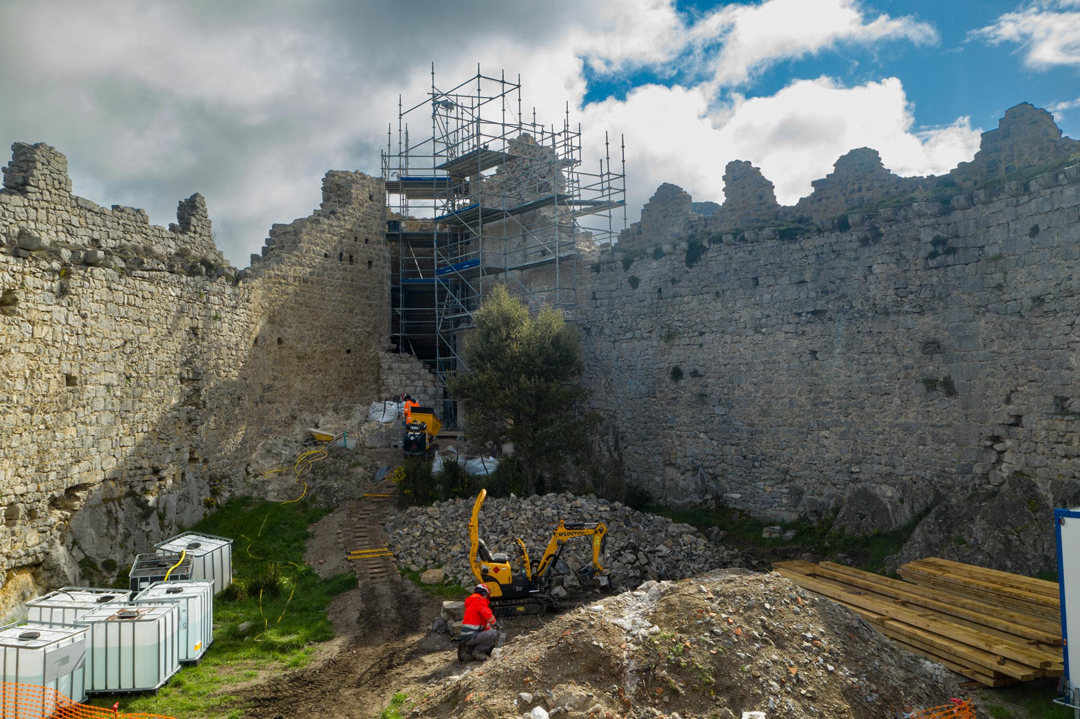
The candidacy process and the prospect of inscription represent significant levers for social development, employment integration, and training. The numerous projects and enhancement activities emerging on and around the fortresses can serve as vehicles for implementing social inclusion initiatives.
Restoration of minor built heritage, creation of pathways, maintenance of vegetation around the castles, production of craft goods for distribution in monument shops, housing renovation, inclusion clauses in fortress conservation operations… the opportunities for action are numerous and contribute to fostering a virtuous social and economic dynamic for the region.